Hiring a lawyer in Singapore usually means something has already gone wrong, or at least is complicated. A visa delay. A contract dispute. A termination letter you didn’t expect. Some Indians based in Singapore specifically look for Indian lawyers in Singapore, because shared language or cultural context can make conversations easier.
Below is a practical overview of five established Indian lawyers in Singapore, including their practice focus, years in practice, and publicly available review information. Think of it as a starting reference point, not a ranking.
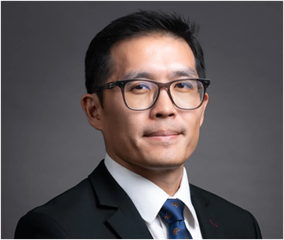
1. Sulochana Uthirapathi: Established Immigration Lawyer In Singapore
In immigration advisory circles, Sulochana Uthirapathi is a familiar name. She is the Founder and Managing Director of Transform Borders, a licensed Singapore Employment Agency. With over a decade of immigration experience, including work at a global immigration law firm, she focuses on legally guided applications rather than generic form submissions.
Singapore immigration isn’t formula-driven. ICA and MOM look at employment history, income, family background, and long-term plans. Sulochana’s work centres on aligning these elements before submission, especially for reapplications, appeals and profiles that may attract closer review.
Her clients range from individuals and families to startups and multinational employers, particularly in technology, finance, trading, and wellness. Her approach focuses on preparation and compliance rather than quick submissions.
Services Offered:
Employment Pass (EP) applications, renewals, and appeals
S Pass, PEP, and ONE Pass applications
Singapore Permanent Residency (PR) applications and reapplications
Singapore Citizenship applications and reapplications
Dependant Pass (DP) and Letter of Consent (LOC)
Long-Term Visit Pass (LTVP) applications and appeals
Employer compliance and corporate immigration advisory
Strategic support for complex or high-scrutiny cases
Years of Service: Over a decade of immigration experience
Google Reviews: 5 Stars based on 45 Google reviews (As of February 2026)
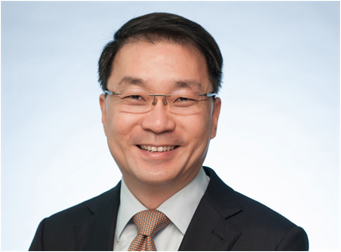
When discussions turn to Singapore’s most prominent lawyers, Davinder Singh is a name that consistently comes up. He is the Executive Chairman of Davinder Singh Chambers LLC and was appointed Senior Counsel in 1997, one of the highest honours in Singapore’s legal profession. Admitted to the Singapore Bar in 1983, he brings over four decades of experience in high-stakes legal disputes.
His practice focuses on complex commercial disputes, arbitration, and regulatory matters, representing clients in Singapore’s highest courts as well as major international arbitration forums. He is typically engaged in large, high-value cases where strategic thinking and courtroom advocacy are critical.
Services Offered:
Commercial and corporate litigation
International arbitration (SIAC, ICC, LCIA, UNCITRAL, and related proceedings)
Banking and financial disputes
Shareholder and partnership disputes
Regulatory and investigations matters
Public and constitutional law matters
Professional misconduct and disciplinary proceedings
Years of Service: Over 40 years in legal practice
Google Reviews: 4.3 Stars based on 6 Google reviews (As of February 2026)
3. Kenneth Pereire: Employment Law Expert
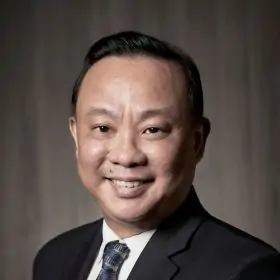
When Singapore companies need guidance on employment law and related corporate matters, Kenneth Pereire provides trusted legal expertise.
He is the Managing Director of KGP Legal LLC, a Singapore-licensed law practice, and a Commissioner for Oaths. Qualified as a Singapore lawyer in 2011, Kenneth has close to 15 years of experience providing corporate, commercial, and employment law advice across Singapore and the ASEAN region.
His work spans employment contracts, HR-related legal guidance, licensing and distribution arrangements, corporate compliance, and cross-border employment matters. He leads a team of experienced lawyers, including former judges, academics, and senior civil servants, delivering high-quality and customized solutions for clients ranging from MNCs to private companies and unicorns.
Services Offered:
Labor and Employment Law advisory and contracts
Corporate and Business Law support
Legal Consulting
Strategic Planning for corporate and HR matters
Cross-border employment and compliance advisory
Years of Service: Nearly 15 years of legal experience
Google Reviews: 5 Stars based on 25 Google reviews (As of February 2026)
4. Simranjit Kaur: Corporate & Family Law Expert
Simranjit Kaurwas admitted as an Advocate & Solicitor of the High Court of Malaya in 2020 and currently serves as Principal Case Manager at Tembusu Law LLC. She provides expert guidance in family and matrimonial disputes, as well as corporate and civil legal matters.
Her experience spans family and matrimonial disputes, civil litigation, and criminal law, including high-profile cases involving serious criminal offences. Simranjit has independently led civil and criminal trials, demonstrating strong advocacy skills, strategic case management, and a practical approach to resolving complex legal issues.
Her practice includes both family disputes and criminal cases, which often require careful handling with clarity and confidence.
Services Offered:
Family & Matrimonial Law advisory and disputes
Civil Litigation & Dispute Resolution
Corporate & Commercial Law support
Criminal Law guidance
Case Management & Trial Preparation
Years of Experience: 6 years
Google Reviews: 4.8 stars based on 857 Google reviews (As of February 2026)
5. Thiru: Criminal & Commercial Litigation Expert
In criminal prosecutions and major commercial disputes, clients turn toThirufor seasoned courtroom representation. Called to the Bar in 1999, he is the Principal of Trident Law. For more than two decades, he has led significant criminal and commercial matters and has been recognised by the Courts for his advocacy, discipline, and strategic approach to litigation.
He is best known for his role in the landmark Muhammad bin Kadar case, Singapore’s longest pro bono criminal trial, where his advocacy was commended by the Court of Appeal. He has also secured acquittals in murder, drug trafficking, and labour trafficking cases, several of which have set legal precedents in Singapore.
Services Offered:
Criminal investigations and trials
Commercial and corporate disputes
Regulatory and enforcement defence
Cross-border investigations advisory
Years of Service: Over 25 years of experience
Google Reviews: 4.8 stars based on 97 Google reviews (As of February 2026)
Frequently Asked Questions
Do Indian lawyers handle cross-border matters involving India?
Many do, especially in areas like business disputes, investigations, family assets, or corporate transactions that span jurisdictions. However, cross-border capability varies by individual. Some lawyers regularly handle multi-jurisdictional work, while others focus strictly on Singapore matters.
How do I choose the right lawyer for my situation?
Start with your specific issue. Criminal charges, shareholder disputes, employment termination, or regulatory investigations each require different expertise. Look at:
Years of relevant practice
Similar cases handled
Court experience
Clarity and honesty during consultation
What should I prepare before meeting a lawyer?
Bring all relevant documents, contracts, correspondence, and a clear timeline of events. Write down your questions in advance. Clear information helps the lawyer assess your situation properly.
Legal decisions often come with cost, pressure, and long-term consequences. The difference between a manageable process and a prolonged one can come down to preparation, expectations, and clear communication from the start.
No directory can replace direct consultation. A brief discussion can quickly reveal whether the lawyer’s approach suits your matter, whether you need detailed hand-holding, a sharp litigation strategy, or straightforward compliance advice. Use our guide above to shortlist any of these Indian Lawyers in Singaporewisely, and make your decision based on clarity, not assumption.
Finding the right lawyer in Singapore can feel overwhelming. Whether you are dealing with immigration challenges, navigating a divorce, facing criminal charges, or structuring a business deal, choosing an experienced legal professional who specializes in your specific needs is crucial.
This guide features 10 highly-rated lawyers across Singapore’s most sought-after practice areas. Each of these lawyers bring proven expertise, strong client reviews, and a track record of successful outcomes.
1) Sulochana Uthirapathi: Established Immigration Lawyer In Singapore
Sulochana Uthirapathi is the founder and managing director of Transform Borders, one of Singapore’s most trusted legally guided immigration consultancies. A qualified immigration lawyer in Singapore with over a decade of experience, including time at a global immigration law firm, she brings a rare combination of deep legal expertise and personal first-hand understanding of Singapore’s immigration journey.
Her legal-centric approach sets Transform Borders apart from typical immigration agencies, with every case receiving thorough legal analysis, strategic positioning, and senior-level oversight. Sulochana has successfully handled complex cases for individuals, families, startups, SMEs, and Fortune 500 companies across wellness, technology, financial services, and trading.
Corporate immigration and work pass compliance for employers
Strategic profile positioning for complex and high-risk immigration cases
Years of service: Over a decade of experience | Transform Borders was founded in 2017
Google reviews: 5 Stars based on 45 Google reviews (As of February 2026)
2) Mohamed Baiross: Highly Rated Criminal Defence Lawyer In Singapore
Mohamed Baiross is the managing partner ofIRBlaw and one of Singapore’s most highly rated criminal defense lawyers. With extensive knowledge of Singapore’s criminal justice system, he provides clear and concise legal advice while remaining highly responsive to client concerns. Mohamed believes that no person should ever be denied access to excellent legal representation because of fees, and his firm is known for competitive rates without compromising on quality.
Services offered:
Criminal defence for all offences (fraud, assault, theft, drug offences)
Police investigation representation
Court representation and trial defence
Bail applications and mitigation pleas
Traffic offences and regulatory violations
White-collar crime defence
Years of service: 15+ years in criminal law
Google reviews: 4.9 Stars based on 150+ Google reviews (As of February 2026)
3) Samuel Yuen: Corporate and Commercial Lawyer In Singapore
Samuel Yuen is the Managing Director and Head of the Corporate Practice Group at YUEN law recognized as a leading legal practitioner in Singapore. With extensive experience in corporate and commercial matters, startups, venture capital, and mergers and acquisitions, Samuel brings both legal expertise and business acumen to his practice. In 2024, Samuel was featured in ALB’s Asia Super 50 Tech Media Technology Lawyers.
Services offered:
Mergers and acquisitions (M&A)
Venture capital and startup advisory
Shareholder agreements and corporate governance
Commercial contracts and negotiations
Intellectual property protection
Public listings and securities matters
Years of service: 20+ years in corporate and commercial law
Google reviews: 4.8 Stars based on 60+ Google reviews (As of February 2026)
4) Daniel Tan: Restructuring, Insolvency & Commercial Litigation Lawyer In Singapore
Daniel Tan is a director and head of the restructuring and insolvency practice group at Providence Law Asia, one of Singapore’s leading dispute resolution firms. He specialises in helping companies and creditors navigate insolvency, where a business can no longer meet its debts. This includes advising on restructuring to keep a company alive, as well as litigation to recover what is owed. Daniel graduated from the University of Sydney and holds a Bachelor of Arts from Pomona College, California. He was trained in the restructuring and insolvency practices of two leading Singapore law firms before joining Providence Law Asia.
Services offered:
Corporate restructuring (court-supervised and out-of-court)
Insolvency and judicial management proceedings
Advising corporate debtors, creditors, and turnaround professionals
Cross-border debt restructuring and enforcement
Fraud, asset recovery, and investigations
Shareholder disputes and minority oppression claims
Corporate and commercial litigation
Special situations and distressed debt advisory
Years of service: 15+ years | Director and Head of.Providence Law Asia
Google reviews: Providence Law Asia is rated 5 Stars based on 2 Google reviews (As of February 2026). Also recognised in Who’s Who Legal, Chambers Asia-Pacific, The Legal 500, IFLR1000, and Benchmark Litigation Asia-Pacific 2025
5) Kenneth Pereire: Employment and Labor Lawyer In Singapore
Kenneth Pereire is an experienced employment lawyer at kgpLegal. Qualified as a Singapore lawyer in 2011, he has more than a decade of experience advising clients across Singapore and the ASEAN region. His practice covers the full spectrum of employment and commercial matters, from wrongful termination and workplace disputes to mergers and acquisitions, cross-border transactions, and corporate structuring.
Kenneth has worked across telecommunications, software, property development, finance, and fintech, advising both multinationals and growing enterprises. His notable work includes conducting extensive due diligence and completing an asset sale in India for a UK-listed company.
Services offered:
Employment contract drafting and review
Wrongful termination and dismissal matters
Employment Pass applications and advisory
Workplace disputes and negotiations
Retrenchment and redundancy advice
Employment Act compliance for employers
Harmonization of overseas and local employment contracts
Years of service: 12+ years in employment law
Google reviews: 4.7 Stars based on 40+ Google reviews (As of February 2026)
6) Kelvin Wong: Energy, Infrastructure & Commercial Lawyer In Singapore
Kelvin Wong is a Partner and Co-Head of the Corporate & Commercial Department at Allen & Gledhill LLP, one of Singapore’s most established law firms. He also co-heads the firm’s Energy, Infrastructure & Projects Practice and Employment, Health & Safety Practice. Qualified at both the Singapore Bar and the Bar of England and Wales, Kelvin brings nearly 30 years of experience advising global and local players across the energy, gas, petrochemical, specialty gases, waste management, and water treatment sectors.
He is widely regarded as one of Asia’s leading lawyers in energy and infrastructure, known for his innovative, solution-focused approach to complex regulatory and transactional matters. His work spans project development, public-private partnerships, cross-border energy transactions, and carbon management projects, alongside advising employers on HR policies, cross-border employment arrangements, and collective bargaining matters. He is consistently ranked by IFLR1000, The Legal 500 Asia Pacific, and Chambers Asia-Pacific, and serves on the boards of Pro Bono SG and the Singapore Anti-Narcotics Association.
Services offered:
Energy and utilities project development
Infrastructure structuring and commercial negotiations
Public-private partnership (PPP) advisory
Regulatory advice for industrial and energy sectors
Cross-border energy transactions and carbon management
Cross-border employment arrangements
HR policies and performance management frameworks
Reductions-in-force and collective bargaining matters
Years of service: 20+ years at Allen & Gledhill LLP
Google reviews: Firm rating: 4.6 Stars (As of February 2026)
7) Lim Fung Peen: Family & Private Wealth Lawyer In Singapore
Lim Fung Peen is a Consultant of the Private Wealth & Family Practice Group at Yuen Law LLC, with around three decades of experience in family and private wealth law. He is ranked as a Litigation Star for family and matrimonial matters in Benchmark Litigation Asia-Pacific. And his team has been recognised by The Straits Times’ Singapore Best Law Firms for six consecutive years.
Fung Peen handles a wide range of family and estate matters, from divorce, child custody, and adoption to wills, probate, trust deeds, and Mental Capacity Act applications. He is a strong advocate for mediation, frequently guiding clients toward amicable resolutions. Notably, he was invited to provide expert witness testimony in a family case before the Australian Court in 2024. Clients consistently praise his empathy, responsiveness, and calm handling of sensitive and emotionally complex cases.
Services offered:
Divorce and matrimonial proceedings
Child custody, access and maintenance
Adoption applications
Personal protection orders
Wills and estate planning
Probate and letters of administration
Trust deeds and family arrangements
Mental Capacity Act applications
Property conveyancing
Years of service: 30 years of experience
Google reviews: 4.8 Stars for Yuen Law LLC based on 60+ Google reviews (As of February 2026)
8) Beatrice Yeo: Award-Winning Family Lawyer In Singapore
Beatrice Yeo is the founding director of Yeo & Associates LLC and one of Singapore’s leading family lawyers. With over 17 years of experience, she specialises in high-stakes matrimonial disputes, providing clients with strategic guidance and practical solutions. In 2018, she was named in Asian Legal Business’s prestigious “40 Under 40”, the only family law practitioner on the list that year.
Her practice covers the full spectrum of family law, from contested and uncontested divorce to high-net-worth asset division, complex child custody disputes, international family law cases, maintenance claims, and family violence matters.
Services offered:
Contested and uncontested divorce
High-net-worth matrimonial asset division
Complex child custody disputes
International family law matters
Maintenance claims and variation
Family violence and protection orders
Years of service: 17+ years in family law
Google reviews: 4.7 Stars based on 90+ Google reviews (As of February 2026)
9) Raphael Louis (Ray Louis): Top-Rated Personal Injury and Accident Lawyer In Singapore
Raphael Louis, commonly known as Ray Louis, is the founder of RayLouis Law Corporation. With over 18 years of experience, he is one of Singapore’s most highly-reviewed personal injury lawyers. Ray is known for fighting tirelessly for his clients while maintaining compassion and transparency throughout what are often difficult and stressful situations.
His practice focuses exclusively on personal injury law, covering motor vehicle accidents, workplace injuries, medical negligence, slip-and-fall incidents, and insurance disputes.
Services offered:
Motor vehicle accident claims
Slip and fall accident claims
Workplace injury claims (WICA and common law)
Whiplash and soft tissue injury claims
Medical negligence cases
Hit-and-run accident claims
Insurance dispute resolution
Years of service: 18+ years in legal practice
Google reviews: 4.9 Stars based on 520+ verified reviews (As of February 2026)
10) Lie Chin-Chin, Property & Conveyancing Lawyer In Singapore
Lie Chin-Chin is the Managing Director of Characterist LLC, a Singapore law firm with roots going back to 1978. With over 30 years of experience, she helps individuals, families, and businesses navigate all kinds of property transactions in Singapore.
Whether you are buying your first home, selling a commercial property, transferring property to a family member, or looking to save on stamp duty through decoupling, Chin-Chin guides clients through the process with clarity and speed. Characterist LLC has been consistently recognised as one of Singapore’s Best Law Firms by the Straits Times from 2020 to 2023.
Services offered:
Buying and selling residential and commercial property
HDB, condo and landed property conveyancing
Decoupling of jointly owned property
En-bloc and collective sales
Setting up property trusts for families
Property transfers by gift or Power of Attorney
Landlord and tenant matters
Property ownership disputes
Applications for foreigners to own landed property
Years of service: 30+ years in legal practice
Google reviews: 4.2 Stars based on 30+ verified reviews (As of February 2026)
Finding the right lawyer can make a significant difference to the outcome of your legal matter. The 10 lawyers featured in this guide represent some of Singapore’s most experienced and highly reviewed legal professionals across key practice areas. From immigration and family law to property, employment, and criminal defence.
Whoever you choose, look for someone who specialises in your specific legal need, communicates clearly, and is transparent about fees from the outset. When in doubt, take advantage of the complimentary initial consultations many of these lawyers offer before committing.
Frequently Asked Questions Around Engaging A Lawyer In Singapore
When should you engage a lawyer?
You should engage a lawyer whenever you face legal matters that have significant personal, financial, or legal consequences. This includes situations like divorce or family disputes, criminal charges or police investigations, employment termination or workplace disputes, buying or selling property, starting or structuring a business, immigration applications or appeals, and estate planning or probate matters.
Early engagement is particularly important in criminal matters (before giving police statements), employment disputes (before signing settlement agreements), and property transactions (before signing Option to Purchase documents).
What category of lawyers should you look for based on your needs?
Singapore lawyers typically specialise in specific practice areas rather than handling all legal matters. Here’s a quick guide to help you identify the right type of lawyer for your situation:
Immigration lawyers: Handle Employment Pass, PR, and citizenship applications and appeals
Family lawyers: Specialise in divorce, child custody, matrimonial asset division, and adoption
Corporate lawyers: Advise on business structuring, mergers and acquisitions, and commercial contracts
Conveyancing lawyers: Handle the legal aspects of buying, selling, and transferring property
Employment lawyers: assist with workplace disputes, wrongful termination, and employment contracts
Choosing a specialist in your specific area ensures you receive knowledgeable advice and effective representation.
Which category of lawyers is most popular in Singapore?
Some of the most popular categories where people engage lawyers in Singapore include:
Family and divorce lawyers: Due to rising divorce rates and the complexity of dividing matrimonial assets and navigating child custody arrangements
Immigration lawyers: Singapore attracts significant foreign talent, creating strong demand for Employment Pass, PR, and citizenship applications
Property and conveyancing lawyers: Every property transaction in Singapore requires legal assistance, making this one of the most frequently engaged practice areas
Criminal defence lawyers: For individuals facing charges or investigations who need representation to protect their rights
Corporate and employment lawyers: Serving Singapore’s thriving business environment across startups, SMEs, and multinational corporations
How do I choose the right lawyer for my case?
Choosing the right lawyer goes beyond just finding someone who practises in the relevant area. Here are the key factors to consider:
Specialisation: Look for a lawyer who focuses specifically on your legal issue, not a generalist who handles everything
Experience: Check how long they have been practising and whether they have handled cases similar to yours
Client reviews: Google reviews and testimonials give you a real sense of how the lawyer treats clients and communicates
Responsiveness: A good lawyer keeps you informed and responds to your queries in a timely manner
Fee Transparency: always ask for a clear breakdown of fees upfront to avoid surprises later
Comfort level: Trust your instincts during the initial consultation; you should feel heard, not rushed
Many lawyers in Singapore offer adiscovery call, which is a great opportunity to assess whether they are the right fit before committing.
What are typical lawyer fees in Singapore?
Lawyer fees in Singapore vary significantly depending on the practice area and complexity of your case. Here are some general ranges to guide your expectations:
Immigration: $2,000 to $12,000 depending on the type of application
Divorce: $1,500 to $35,000+ depending on whether it is contested or uncontested
Criminal defence: $3,000 to $50,000+ depending on the severity of the charge
Conveyancing: $2,000 to $4,000, typically charged as a fixed fee
Corporate matters: $300 to $800+ per hour, or project-based pricing
Employment: $500 to $20,000 depending on the complexity of the dispute
These figures are indicative only and can vary between law firms and individual lawyers. Always request a detailed fee quote upfront before engaging in any legal services.
Do I need a lawyer, or can I represent myself?
Self-representation is legally permitted in Singapore, but it carries significant risks in most situations. Here are some scenarios where engaging a lawyer is strongly recommended:
Criminal charges or police investigations: The stakes are too high to navigate alone
Complex legal matters: Areas like immigration, corporate law, and contested divorce involve intricate rules that are difficult to navigate without expertise
When the other party has legal representation: Going unrepresented puts you at a serious disadvantage
High-value transactions: Property purchases, business deals, and asset division require professional oversight
That said, some straightforward matters such as small claims or simple uncontested divorces may not require full legal representation. Even so, a complimentary call is always a good starting point to understand your options before deciding.
Disclaimer: This article is for informational purposes only and does not constitute legal advice.
A practical guide to eligibility routes, application considerations, timelines and common pitfalls
Last updated: March 2026
The Long-Term Visit Pass (LTVP) allows certain foreign family members and visitors to remain in Singapore for an extended period. It is not a single, uniform pass, and approval is never automatic.
This guide is intended for applicants and sponsors who want a clear, realistic understanding of how Long-Term Visit Pass applications are typically assessed in Singapore, beyond basic eligibility lists.
The correct application route depends on who your sponsor is and which authority assesses the application, either the Immigration and Checkpoints Authority (ICA) or the Ministry of Manpower (MOM). Misunderstanding this distinction is one of the most common reasons LTVP applications are delayed, rejected, or not accepted for processing.
Depending on your circumstances, LTVP applications may apply to spouses, children, parents, grandparents of students, graduates seeking employment, or visitors seeking permission to give birth in Singapore.
This guide explains:
how to determine whether your LTVP falls under ICA or MOM,
how applications are assessed in practice,
expected timelines and documentation standards, and
common pitfalls that affect approval and renewal.
At a glance
The Long-Term Visit Pass (LTVP) allows eligible foreign family members and certain visitors to stay in Singapore long-term.
Applications are assessed either by ICA or MOM depending on the sponsor and relationship.
Approval is discretionary and is typically assessed across relationship genuineness, financial support, and overall credibility of the proposed stay.
Before preparing documents, it is essential to confirm which authority applies. ICA and MOM apply different eligibility rules, documentation standards, and timelines.
You are usually under
ICA
if you are applying as:
Spouse of a Singapore Citizen
Spouse of a Singapore Permanent Resident (PR)
Child under 21 (born within a legal marriage to, or legally adopted by, a Singapore Citizen or PR)
Parent of a Singapore Citizen or PR (parents-in-law are not eligible)
Parent or grandparent of a child studying in Singapore on a Student’s Pass (only one applicant; local sponsor required)
Visitor seeking permission to give birth in Singapore (local sponsor required)
You are usually under
MOM
if your sponsor is a work pass holder and you are applying as:
Common-law spouse of an Employment Pass holder
Unmarried step-child under 21, or unmarried handicapped child aged 21 and above
Parent of an Employment Pass holder earning at least S$12,000 per month
A frequent source of error is assuming that all spouses fall under ICA. For Employment Pass holders, legally married spouses generally qualify for a Dependant’s Pass, while common-law spouses fall under LTVP instead.
For a broader overview of how Singapore’s immigration framework is structured across different passes, you may find our overview of immigration agency Singapore services helpful.
Although eligibility categories are clearly defined, LTVP approval is ultimately discretionary. In practice, applications are assessed holistically rather than by checklist alone.
Across most ICA-managed LTVP applications, assessment tends to focus on three core areas:
1. Genuineness of the relationship or family unit
Officers look at whether the relationship is credible, ongoing, and consistent with the documents submitted. This is particularly important for:
newly married couples,
couples who have lived apart for extended periods, or
families with complex prior histories (divorce, remarriage, custody arrangements).
2. Financial support and stability
There is no single published income threshold for ICA-managed LTVPs. Instead, the assessment considers whether the family unit can reasonably support itself in Singapore. This may include:
the sponsor’s income and employment,
overseas income or savings,
housing arrangements, and
realistic plans for financial support during the stay.
A non-traditional financial profile does not automatically result in refusal, but it must be explained clearly and coherently.
This assessment approach is often misunderstood by applicants who assume there is a fixed income threshold. In practice, ICA’s approach is closer to a holistic assessment, similar to how long-term residency applications are reviewed.
3. Overall credibility and consistency
Applications are more likely to face difficulty where:
declarations differ across forms,
supporting documents contradict each other, or
key details (such as residence, employment, or family structure) are unclear.
Strong applications make it easy for an officer to verify facts quickly.
Foreign spouses of Singapore Citizens apply under ICA, with the Singapore Citizen spouse acting as sponsor via Singpass.
Pre-Marriage LTVP Assessment (PMLA)
ICA offers the Pre-Marriage LTVP Assessment (PMLA) for couples intending to marry. While PMLA does not guarantee approval, it provides early visibility into how ICA may view the relationship and support framework. Where PMLA has been completed, ICA notes that processing times for a subsequent LTVP application may be shorter.
Practical assessment focus
For spouse cases, ICA typically assesses the application from two main angles:
Financial support and stability, and
Genuineness and sustainability of the marriage.
Applications that address both angles clearly tend to progress more smoothly than those that rely heavily on one while neglecting the other.
For an example of how ICA concerns around financial profile, marriage duration, and overall credibility were addressed on appeal, see our LTVP appeal success case study.
4) LTVP for spouses of Singapore Permanent Residents (ICA)
This is a separate ICA category from Singapore Citizen cases. The Singapore PR spouse sponsors the application via Singpass.
While similar factors are assessed, PR-sponsored applications are often evaluated with closer attention to long-term settlement intent and stability in Singapore.
Work permission for spouses on LTVP (important clarification)
An LTVP is a stay permission. Any right to work in Singapore is assessed separately and is not automatic, even for spouses.
For foreign spouses of Singapore Citizens, ICA may, in some cases, issue a Pre-approved Letter of Consent (PLOC) together with the LTVP. Where granted, a PLOC allows the LTVP holder to work in Singapore without applying for a separate work pass, subject to prevailing conditions. A PLOC is not guaranteed and is issued at ICA’s discretion based on the overall assessment of the application.
For foreign spouses of Singapore Permanent Residents, a PLOC is generally not issued. Where an LTVP holder wishes to work in Singapore, they must apply separately for the appropriate Letter of Consent (LOC) through the Ministry of Manpower, subject to MOM’s eligibility requirements.
Many applicants assume that marriage to a Singapore Citizen or PR automatically confers the right to work. In practice, stay permission and work permission are assessed independently, and this distinction becomes particularly important after LTVP approval. You may find it helpful to review our guide to the Letter of Consent (LOC) for LTVP holders who intend to work or operate a business in Singapore.
5) LTVP for common-law spouses of Employment Pass holders (MOM)
Common-law spouses of Employment Pass holders may be considered for an LTVP under MOM’s family framework. However, this category is assessed strictly.
MOM generally expects the common-law relationship to be legally recognised or formally documented in the country of origin. This typically requires clear, official evidence that the relationship is recognised under the laws of that jurisdiction.
Singapore does not generally recognise common-law relationships on its own. In the absence of legally supported documentation from the home country, applications under this category are often difficult to sustain.
Work permission limitation (important)
An LTVP issued to a common-law spouse under this category does not allow the holder to apply for a Letter of Consent (LOC) to run a business or be self-employed. Where the individual wishes to work in Singapore, they must qualify for and obtain a separate work pass under MOM’s prevailing requirements.
6) LTVP for children under 21 of Singapore Citizens or PRs (ICA)
ICA allows applications for unmarried children under 21 who are born within a legal marriage to, or legally adopted by, a Singapore Citizen or Permanent Resident.
Common pitfall: step-children are not automatically eligible.
Where the child is a step-child, ICA generally requires evidence of legal adoption and full custody by the Singapore Citizen or PR sponsor. A spousal relationship alone is usually insufficient. Applications that proceed without addressing adoption or custody clearly are commonly rejected or not accepted for processing.
8) LTVP for parent or grandparent of a child on a Student’s Pass (ICA)
ICA permits only one parent or grandparent to apply under this category. A local sponsor who is a Singapore Citizen or PR aged 21 or above is mandatory.
Work and income considerations (important)
An LTVP granted to a parent or grandparent accompanying a child on a Student’s Pass is a stay permission only and does not confer any right to work in Singapore.
Based on MOM’s clarifications, activities involving Singapore-based employers, entities, or clients are not permitted while holding an LTVP under this category. Where the individual later wishes to take up employment in Singapore, a separate work pass application must be made, and the LTVP must be cancelled before the work pass can be issued, as only one immigration pass may be held at any point in time.
9) Visitor seeking permission to give birth in Singapore (ICA)
This is a distinct ICA category and is not a routine visit pass extension.
Key requirements include:
a local sponsor who is a Singapore Citizen or PR aged 21 or above,
submission via Singpass by the sponsor, and
medical and embassy documentation addressing delivery timing, any complications, and the child’s nationality.
This category is assessed strictly, and applications are commonly delayed or not accepted where sponsorship or medical documentation is incomplete or unclear.
Where relevant, you may find it helpful to review how ICA approaches visit pass extensions and documentary expectations in practice.
LTVP validity (practical expectation)
Where approved, permission to give birth in Singapore is typically granted for a limited period, often for six months, depending on the expected delivery date and ICA’s assessment.
10) After approval: understanding IPA and formalities
An In-Principle Approval (IPA) is not an immigration pass and does not confer valid stay. Applicants must complete all post-approval requirements within the IPA validity period, including medical checks and document uploads where required. Failure to do so may result in the application being treated as withdrawn.
Across LTVP categories, the most frequent issues include:
Applying under the wrong authority (ICA vs MOM)
Sponsor eligibility or Singpass readiness issues
Visit pass expiry problems for MOM-managed applications
Under-documentation of complex family situations
Assuming LTVP automatically includes work permission
An LTVP is a stay permission. Any right to work is assessed separately. Where repeated short-term entries or prior refusals are involved, you may also find it helpful to understand how Singapore entry appeal assessments are generally approached in practice.
The initial validity varies by category and individual assessment. ICA-managed LTVPs are often granted for one to two years, but shorter or longer periods may be issued depending on circumstances. Validity at renewal may differ from the initial grant.
How long does an LTVP application take to process?
ICA states that most applications are processed within six weeks if documents are in order, although foreign spouses of Singapore Citizens may take up to six months. MOM-managed family LTVPs are typically processed within three to eight weeks, depending on category.
Is financial support assessed strictly by income level?
No. There is no single published income threshold for ICA-managed LTVPs. Financial stability is assessed holistically, taking into account income, savings, housing arrangements, and overall support plans. Similar holistic principles also apply in other long-term immigration assessments in Singapore.
Is the IPA enough to stay in Singapore?
No. IPA is not an immigration pass and does not confer valid stay.
Do I need a local sponsor for certain LTVP applications?
Yes. A local sponsor who is a Singapore Citizen or Permanent Resident aged 21 or above is required for specific LTVP categories, including: -visitors seeking permission to give birth in Singapore, and -parents or grandparents accompanying a child studying in Singapore on a Student’s Pass.
The sponsor must submit the application via Singpass and is responsible for supporting the application during ICA’s assessment.
Can parents or grandparents on an LTVP work in Singapore while accompanying a student?
No. An LTVP issued to a parent or grandparent accompanying a child on a Student’s Pass does not allow employment in Singapore.
If the individual later receives a job offer from a Singapore-based employer, a separate work pass application must be submitted, and the LTVP must be cancelled before the work pass can be issued, as only one pass may be held at any time.
Certain forms of remote work for overseas entities may be treated differently, depending on the specific facts and compliance considerations.
Can an LTVP holder later apply for Singapore Permanent Residency?
In some cases, yes. Certain LTVP holders, particularly foreign spouses of Singapore Citizens or Permanent Residents, may later consider applying for Singapore Permanent Residency depending on factors such as length of stay, family stability, employment history, and overall integration into Singapore.
However, holding an LTVP does not automatically lead to PR approval, and Permanent Residency applications are assessed separately under ICA’s prevailing criteria.
Where an application involves discretionary assessment, prior refusals, or complex family circumstances, applicants may benefit from understanding how a
Singapore immigration lawyer
typically approaches family-based and long-term stay applications.
If you are considering an LTVP application, or if your circumstances involve factors such as a recent marriage, overseas income, complex family arrangements, or a prior refusal, it is often helpful to assess the correct route and documentation strategy early.
About the Author:Sulochana Uthirapathi
is the Founder of
Transform Borders,
a Singapore immigration consultancy established in 2017. She specialises in Employment Pass (EP),
Permanent Residency (PR) and Citizenship applications, supporting professionals, families and
corporate clients with legally guided and structured immigration processes.
Singapore’s immigration framework in 2026 continues to prioritise quality over quantity, with stronger emphasis on long-term contribution, workforce sustainability, and social integration. Recent parliamentary replies and population data also suggest that while immigration intake remains stable, Singapore is preparing for long-term demographic pressures linked to low fertility and an ageing population.
Written by: Sulochana Uthirapathi, Singapore Immigration Lawyer & Managing Director at
Transform Borders
Last updated: January 2026
This report provides a consolidated overview of Singapore’s latest immigration, workforce, PR, and citizenship trends based on government releases, parliamentary statements, and current policy developments.
Key takeaway:
Singapore’s 2025–2026 immigration framework remains stable but more selective. Policy emphasis has shifted toward sustained economic contribution, stronger integration signals, and clearer differentiation between short-term mobility and long-term settlement.
Singapore is a vibrant city-state known for its economic strength and cultural diversity. Immigration has long been a cornerstone of its success, shaping not only the workforce but also the rhythm of daily life.
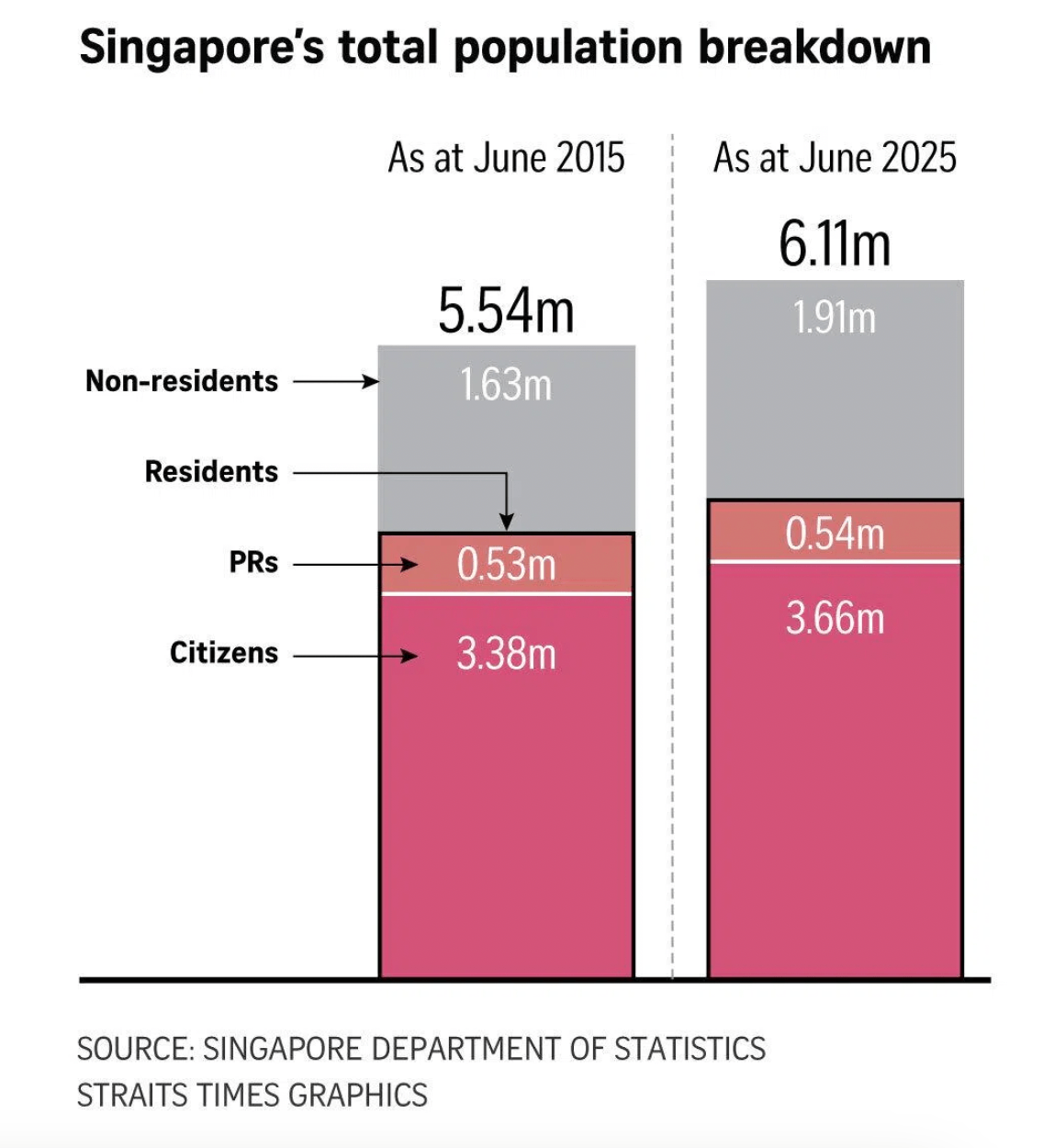
According to Population in Brief 2025, Singapore’s total population has reached 6.12 million, reflecting stable citizen growth and a measured rise in foreign professionals and essential workers. This demonstrates the government’s ongoing effort to balance economic vitality with social harmony.
In 2025, policies continue to prioritise workforce quality and long-term sustainability. The focus is on attracting globally competitive talent through work opportunities and encouraging entrepreneurship through business pathways, while maintaining routes for long-term contributors seeking Permanent Residency or citizenship.
Singapore remains open to global talent and enterprise, but with increasing emphasis on community integration, economic participation, and accountability.These principles ensure that immigration continues to support both national growth and community cohesion.
Quick Summary:
Singapore’s immigration framework balances economic openness with long-term social integration through data-led policy design.
Singapore has long been a hub for innovation and opportunity. Its immigration framework supports both economic competitiveness and demographic sustainability, ensuring every new resident contributes meaningfully to national priorities.
The Ministry of Manpower (MOM) and the Immigration & Checkpoints Authority (ICA) oversee policies that balance workforce needs with community cohesion. These agencies adjust regulations regularly in response to market conditions, labour demand, and social feedback — a reflection of Singapore’s data-driven governance model.
According to SingStat, nearly 30 per cent of Singapore’s population comprises non-residents, underscoring the significant role immigrants play in sustaining the nation’s economic dynamism.
Singapore’s immigration framework includes:
Employment Pass (EP): for professionals and executives.
S Pass: for mid-level technical staff.
Work Permit: for essential manpower in construction, domestic work, and healthcare.
Permanent Residency (PR): for individuals who contribute to Singapore’s long-term growth.
Citizenship: for PRs who have demonstrated strong social and economic ties.
The city also attracts international students and families who value its education system and safety. This younger demographic contributes to future workforce renewal, while integration programmes encourage community participation and cross-cultural understanding.
Singapore’s approach reflects a long-standing principle: openness anchored in accountability. By maintaining this balance, the country continues to thrive as one of the world’s most connected and forward-looking societies.
(For detailed guidance on navigating Singapore’s immigration policies and applications, visit our Immigration Lawyer Singapore page.)
1.1: Historical Context of Singapore’s Immigration Policies
At a glance(2026):
Singapore’s immigration policies evolved from open regional migration to a structured, merit-based system focused on talent quality and social cohesion.
Singapore’s immigration journey is closely linked to its national development. In the early twentieth century, migrants from China, India, and the Malay Archipelago arrived in search of trade and work opportunities. These communities formed the foundation of the multicultural society that defines Singapore today.
After independence in 1965, Singapore began a period of rapid industrialisation. The government welcomed foreign labour to meet the manpower needs of growing industries such as manufacturing and construction.
By the 1980s and 1990s, the focus shifted from industrial labour to skilled professionals. As Singapore developed into a financial and innovation hub, policies started to prioritise global talent and education-driven migration.
In the 2000s and 2010s, new frameworks such as the S Pass and tighter Permanent Residency criteria were introduced to refine the balance between economic openness and population sustainability. These adjustments were guided by data, public feedback, and a continued emphasis on social cohesion.
Singapore’s ability to adapt immigration policy in response to demographic and global changes remains one of its strengths. Each phase, from post-independence growth to today’s innovation economy, reflects a consistent principle of openness grounded in accountability.
Understanding this evolution provides context for current trends and shows how historical pragmatism continues to shape Singapore’s approach to population, talent, and national identity.
At a glance (2026): Singapore’s population reached a record 6.12 million in 2025, driven by steady resident growth and targeted foreign workforce demand.
According to Population in Brief 2025 and SingStat data, Singapore’s population grew by 1.3 per cent year-on-year, reaching 6.12 million — a record high that reflects steady citizen growth and a carefully managed rise in non-residents.
Residents (Citizens + PRs): 4.14 million
Non-residents: 1.98 million
Singapore’s resident and non-resident population breakdown from 2015 to 2025.
Most new non-residents are in construction, caregiving, and domestic roles, sectors still recovering from post-pandemic shortages. Meanwhile, the professional segment saw continued expansion, particularly in technology, finance, and healthcare. (Learn more about Employment Pass eligibility and sector-based hiring trends.)
Foreign professionals, students, and entrepreneurs now form an essential pillar of Singapore’s economy. As industries evolve, the government’s approach increasingly emphasises workforce sustainability and long-term economic value, ensuring every entrant contributes to long-term growth and local employment balance.
Singapore’s careful border reopening and data-led manpower planning have stabilised labour supply without overheating the job market. The MOM Labour Market Report Q2 2025 notes that overall unemployment remains below 3 per cent, with continued demand in growth sectors such as green energy, biomedical research, and digital services.
It also highlights Singapore’s unique position as one of Asia’s most open yet tightly managed labour markets, balancing economic necessity with social stability.
3. Employment Pass, S Pass and Foreign Workforce Dynamics
At a glance(2026): Higher salary thresholds and tighter compliance checks reflect Singapore’s shift toward quality hiring and long-term workforce sustainability.
Singapore’s manpower strategy in 2025 continues to emphasise quality over quantity.
According to the Ministry of Manpower (MOM), approvals for new work passes have become more selective as part of a long-term plan to strengthen local-foreign complementarity rather than substitution.
Key Developments
1. Higher qualifying salaries
Employment Pass (EP) thresholds now scale with seniority and experience, ensuring parity with local professionals. This aligns with the COMPASS framework, introduced to measure applications across salary, qualifications, diversity, and local hiring ratios.
At the upper tier, the Personalised Employment Pass (PEP)remains available to established professionals earning at least S$22,500 per month, offering flexibility to switch employers without reapplying. Above that, the Overseas Networks & Expertise Pass (ONE Pass) targets exceptional global talent earning S$30,000 or more per month, or recognised for outstanding achievements in areas such as research, innovation, or the arts.
Together, these frameworks reinforce Singapore’s long-term strategy to attract world-class professionals while maintaining fairness, transparency, and opportunities for local progression.
2. Greater scrutiny of renewals
Renewals undergo a more detailed evaluation of tax compliance, CPF contributions for local staff, and business performance. Companies must show continued contribution to Singapore’s economy and workforce stability.
Year-on-year change in foreign employment in Singapore (2015–2025)
3. Sector-based adjustments
Growth sectors such as digital services, biomedical research, and green energy receive priority processing, reflecting Singapore’s shift toward high-skill industries. Conversely, reliance on low-wage or short-term labour remains tightly regulated through Work Permit quotas.
4. Balanced pathways for entrepreneurs and start-ups
For innovators, the EntrePass programme continues to offer a gateway for founders who contribute to Singapore’s innovation ecosystem through venture-backed or high-potential start-ups.
For employers, these policies mean preparation is essential.
Strong documentation, accurate salary benchmarking, and well-defined job scopes are now critical to approval. MOM expects applications to clearly demonstrate why a foreign professional’s expertise is necessary and how the hire supports local capability building.
Businesses navigating Employment Pass renewals, compliance reviews, or multi-hire planning often work with a licensed immigration agency in Singapore to manage documentation, timelines, and ongoing submissions alongside legal oversight.
Singapore’s approach reflects a mature labour ecosystem—open to talent yet firm on accountability. Together, these refinements ensure that immigration continues to serve national goals of competitiveness, inclusivity, and shared progress.
For family members of Employment Pass holders, the Ministry of Manpower continues to support flexible work options through the Letter of Consent (LOC) scheme. Eligible Dependant Pass and Long-Term Visit Pass (LTVP) holders may apply to work or operate a business in Singapore under clear renewal and compliance guidelines.
4. Permanent Residency and Citizenship: Current Trends
At a glance(2026): PR and citizenship approval numbers remain broadly stable, although recent policy discussions suggest immigration intake may gradually evolve in response to demographic and workforce pressures.
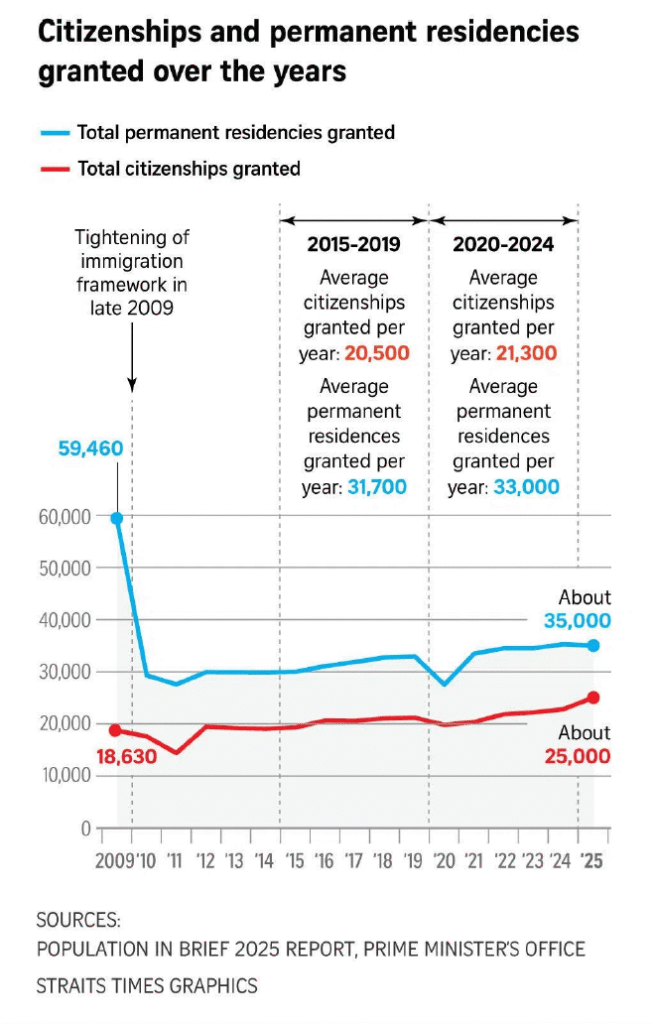
Singapore PR and citizenship approvals from 2009 to 2025.
According to the Parliamentary Replies and government population data around 34,800 individuals were granted Permanent Residency and about 23,000 became Singapore citizens in 2024. In 2025, the figures remained broadly stable, with around 35,000 new PRs and 25,000 new citizenships granted. These numbers remain broadly consistent with Singapore’s long-term and carefully managed population planning approach.
More recent parliamentary discussions in early 2026 also signalled that immigration intake may gradually increase over time in response to demographic pressures such as Singapore’s declining fertility rate and ageing population. Public discourse has increasingly focused not only on immigration numbers, but also on integration, long-term contribution, and social cohesion.
Minister Indranee Rajah further clarified in Parliament that Singapore’s methodology for determining PR and citizenship intake has not fundamentally changed, and continues to take into account factors such as life expectancy, age profile, and the quality of applications received.
With an ageing population and tight labour market, Singapore continues to prioritise Permanent Residency and citizenship applicants who strengthen workforce renewal, contribute economically, and participate meaningfully in community life.
PR and citizenship applicants are encouraged to present a coherent personal narrative demonstrating steady employment, CPF contributions, and social participation. This approach balances fairness and merit, ensuring new residents add depth to Singapore’s long-term social fabric.
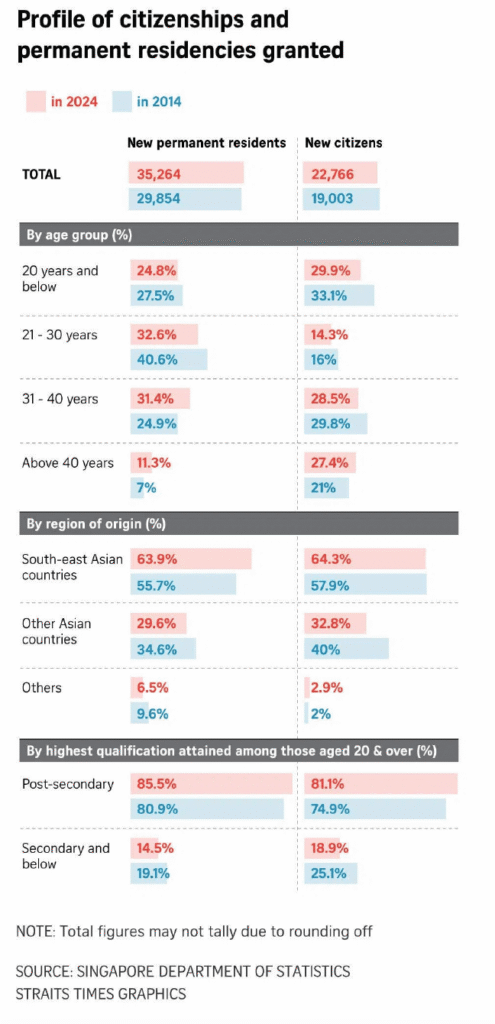
Demographic and educational profile of newly approved PRs and citizens in Singapore.
Recent population data also provides insight into the demographic and educational profile of newly approved PRs and citizens. Overall, the approval profile continues to reflect Singapore’s emphasis on economically active age groups, workforce participation, educational attainment, and long-term integration potential.
Those assessing their long-term residency and settlement prospects may also find it useful to review our Singapore PR eligibility calculator and assessment tool , together with our guide to Singapore PR requirements, which outlines some of the practical profile factors commonly associated with stronger PR applications over time.
Importantly, stable approval numbers do not indicate relaxed criteria. ICA continues to assess applications holistically, with increasing emphasis on consistency, long-term settlement signals, and integration rather than application volume.
At a glance(2026): Singapore’s immigration outlook is shaped by moderate GDP growth, tech-led sectors, and calibrated foreign workforce policies.
The Ministry of Trade and Industry (MTI) projects GDP growth between 1.5 and 2.5 per cent in 2025, supported by expansion in digital services, biomedical sciences, and green manufacturing.
These trends reflect Singapore’s strategy to balance innovation with inclusive growth which encourages global expertise while investing in local capability through initiatives such as SkillsFutureand talent renewal grants.
Immigration remains a vital pillar of this ecosystem. Skilled foreigners complement an ageing local workforce, while permanent residents and entrepreneurs help anchor long-term economic resilience.
To maintain transparency, agencies such as MOM, ICA, and IRAS increasingly share data to verify company compliance before approving passes or renewals. This integrated approach safeguards fairness and public trust.
For investors and entrepreneurs, Singapore’s pro-business environment, predictable regulation, and transparent immigration pathways make it a preferred base for regional expansion.
At a glance(2026):
Integration in Singapore happens through everyday community life, not just government programmes. Programmes under the
National Integration Council (NIC)
such as Who’s Your Neighbour? and Unity in Diversity provide opportunities for locals and newcomers to connect and collaborate.
Integration can take many forms:
Joining grassroots or community club activities.
Volunteering in local schools or resident committees.
Learning local phrases or celebrating multicultural festivals.
Building authentic workplace relationships beyond professional circles.
Employers also play a key role. They can encourage inclusivity through mentorship programmes, cross-cultural onboarding, and celebrating cultural events within teams. These small but meaningful actions align with Singapore’s vision of unity through diversity, a principle that keeps social cohesion strong as demographics evolve.
For many newcomers, Singapore’s first impression is efficiency. But what makes people stay is the sense of belonging that slowly grows through shared experiences, from hawker centres to community volunteering and everyday neighbourly gestures.
Public sentiment toward immigration in Singapore remains broadly balanced, with continued support for economic openness alongside strong emphasis on social cohesion, fairness, and long-term integration.
Singaporeans generally recognise that foreign professionals and workers play an important role in supporting innovation, investment, healthcare, technology, and broader economic resilience. At the same time, public discussions increasingly focus on how newcomers integrate into local communities and contribute beyond purely economic participation.
Reflecting this shift, Singapore has begun introducing more structured integration initiatives for newly approved Permanent Residents. In late 2025, the Government piloted a new Permanent Resident Journey programme designed to help new PRs better understand Singapore’s culture, social norms, and community expectations through a combination of e-learning modules and experiential activities such as museum visits and local community events.
Authorities have also announced plans to pilot a voluntary orientation programme for Employment Pass holders in 2026, signalling a broader emphasis on helping newcomers integrate more smoothly into Singapore’s social and cultural environment alongside workplace participation.
Bottom line
Singapore’s immigration approach is increasingly focused not only on attracting talent, but also on encouraging long-term integration, community participation, and social stability as demographic pressures evolve.
At a glance(2026): Singapore stands out regionally for its selective, predictable, and long-term immigration framework.
Across Asia, governments are recalibrating immigration policy to attract global talent and remote professionals. While countries like Malaysia and the UAE focus on flexibility, Singapore’s strategy remains selective, emphasising quality, compliance, and long-term economic participation over volume.
🌏Regional Outlook: Asia Talent Visas at a Glance (2026)
A quick comparison of popular talent pathways in the region. Use this to position Singapore’s strengths for long-term planning.
Jurisdiction
Programme
Who it targets
Highlights
Considerations
Singapore
Employment Pass (EP), S Pass, ONE Pass (top earners)
Residency links to sponsorship or investment; different tax regime
Bottom line
Singapore’s edge is predictability and long-term clarity. If your goal is regional headquarters, stable family settlement, or structured career growth, Singapore offers a clear, rules-based pathway with strong legal certainty.
Singapore’s consistency continues to rank it at the top of regional indices such as the Global Talent Competitiveness Index. This reputation reinforces its position as Asia’s most predictable and trusted destination for skilled professionals and investors seeking long-term stability
🎓 International Students and Pathways
International students continue to play a vital role in Singapore’s talent ecosystem. Many choose to remain after graduation, contributing to innovation-driven sectors such as technology, finance, and healthcare.
Graduates may transition from a Student’s Pass to an
Employment Pass
or
S Pass
if they meet eligibility criteria. These pathways strengthen Singapore’s future-ready workforce and reflect the city’s commitment to attracting global talent while nurturing local opportunities.
At a glance (2026):
Singapore’s immigration system is becoming more data-integrated, selective, and renewal-focused, while longer-term demographic pressures may gradually influence future PR and citizenship intake planning.
What this means going forward:
Applicants and employers should expect fewer abrupt policy shifts, but greater scrutiny around compliance, economic contribution, workforce quality, integration, and long-term alignment with Singapore’s broader population and labour objectives.
Employers and applicants should also expect stronger emphasis on documentation consistency across immigration, tax, and corporate records during both initial applications and renewals.
Singapore’s next phase of immigration policy will likely emphasise three key directions:
The latest MOM Labour Market Report Q2 2025 highlights these cross-checks as part of a broader data-driven approach to maintain fair employment practices.
2. Greater transparency and fairness in applications.
Authorities are giving more attention to corporate tax compliance, salary justification and equal-opportunity hiring. Companies that demonstrate strong governance and timely tax filings tend to see smoother renewals, according to the Baker McKenzie Global Immigration Handbook 2025.
3. Visible signs of social contribution.
While integration is not formally scored, the National Integration Council (NIC) continues to encourage participation in neighbourhood, school and workplace initiatives such as Who’s Your Neighbour? and Unity in Diversity. These programmes highlight how everyday community involvement can help newcomers build belonging and complement professional success.
As Singapore moves into 2026, it faces both opportunities and trade-offs. Global talent mobility and sustainability goals will test how far the system can innovate without diluting fairness. At the same time, advances in digital verification and cross-border data systems will enable faster and more transparent immigration decisions, positioning Singapore to stay agile amid regional competition.
4. Demographic pressure and long-term population planning
Singapore’s long-term immigration planning is increasingly linked to demographic sustainability. In 2025, Singapore’s preliminary total fertility rate fell to 0.87, among the lowest globally. Public discussions in 2026 have therefore focused more closely on how immigration, integration, workforce renewal, and population sustainability interact over the long term.
At the same time, the Government has consistently emphasised that immigration policy is not driven purely by population growth targets. Social cohesion, population stability, and maintaining a stable citizen core remain central policy considerations alongside economic needs.
As demographic pressures continue to evolve, Singapore’s approach is likely to remain measured rather than expansionary, prioritising long-term contribution, workforce quality, and social stability over rapid population growth.
Together, these developments reflect Singapore’s evolving balance between openness and accountability. The government continues to refine immigration processes so that both individuals and businesses contribute meaningfully, economically, socially, and ethically to Singapore’s long-term stability and growth.
Singapore’s immigration system in 2025 reflects refinement, resilience and readiness for the future.
The balance between attracting global talent and maintaining social harmony continues to define Singapore’s position as a trusted global hub.
For foreign professionals: Strong career opportunities remain available across technology, finance and healthcare.
For PR and citizenship applicants: Success depends on planning ahead, showing stability and contributing meaningfully to the community.
For businesses: Aligning hiring practices with Singapore’s transparent standards supports smoother approvals and long-term compliance.
Ultimately, immigration in Singapore is not just an administrative process. It is a long-term partnership between people and policy, designed to sustain both economic growth and social cohesion.
1.What is the single biggest immigration trend in Singapore for 2026?
The most significant trend is increased selectivity without numerical reduction. Singapore continues to welcome foreign professionals and long-term residents, but approvals increasingly depend on quality of contribution, compliance history, and integration indicators rather than eligibility alone.
2. What are the key immigration trends in Singapore for 2025?
Singapore’s immigration policies in 2025 focus on attracting quality talent, maintaining stable PR and citizenship numbers, and deepening social integration through community engagement.
3. How has the population changed in 2025?
According to Population in Brief 2025, Singapore’s population reached 6.12 million, comprising 4.14 million residents and 1.98 million non-residents. The increase reflects steady citizen growth and a carefully managed rise in foreign manpower.
4. What is Singapore’s focus for PR and citizenship policies?
Permanent Residency and Citizenship applications are assessed holistically, considering career consistency, economic contribution, family stability, and social participation rather than nationality or income alone.
5. How can newcomers integrate successfully into Singapore society?
Newcomers can integrate successfully by participating in community clubs, volunteering, learning local languages, and joining workplace inclusion initiatives. These everyday efforts reflect Singapore’s spirit of unity through diversity and support long-term settlement goals.
Expert Insight:
Consulting an immigration lawyer in Singapore can provide clarity on eligibility, strengthen your documentation, and ensure your application aligns with current policies. Professional guidance helps you approach the process with confidence and precision.
This immigration trends report is intended to provide context and clarity on how Singapore’s work pass, PR, and citizenship policies are evolving.
If you would like structured guidance on how these policy developments may affect your work pass, Permanent Residency, or citizenship plans, you may refer to our Singapore work pass services, which outline the scope of assistance available for professionals, employers, and families.
You may also book a 20-minute consultation to clarify eligibility frameworks, timing considerations, and the appropriate immigration pathway based on your circumstances. This discussion is intended to help clarify eligibility frameworks and appropriate next steps.
About the Author:Sulochana Uthirapathi
is the Founder of
Transform Borders,
a Singapore immigration consultancy established in 2017. She specialises in Employment Pass (EP),
Permanent Residency (PR) and Citizenship applications, supporting professionals, families and
corporate clients with legally guided and structured immigration processes.
Before you begin your application, it is important to understand the Singapore citizenship requirements set by the Immigration and Checkpoints Authority (ICA) and how these are assessed in practice.
This guide breaks down the official criteria, explains ICA’s evaluation factors, and clears up common misconceptions so you know whether you are ready to take the next step.
While ICA publishes eligibility categories, citizenship approval is discretionary and based on a holistic assessment of each applicant’s long-term commitment to Singapore.
You may apply for Singapore citizenship if you fall under one of these categories:
a) Permanent Residents (PRs) aged 21 and above
You must have held PR status for at least two years at the time of application. If you are still assessing whether you meet Singapore’s PR eligibility requirements or how PR status is evaluated, you may find our guide on Singapore PR requirements helpful.
You can include your spouse and unmarried children under 21 (born within a legal marriage or legally adopted).
b) Spouse of a Singapore Citizen
You must have been a PR for at least two years and married to a Singapore citizen for at least two years. Your spouse will act as the sponsor.
c) Unmarried Child Below 21 Years Old
You must be born within a legal marriage or legally adopted by a Singapore citizen parent, who will submit the application as your sponsor.
d) PR Student Studying in Singapore
You must have lived in Singapore for more than three years (including at least one year as a PR) and passed at least one national exam (PSLE, GCE ‘N’, ‘O’, ‘A’ levels) or be enrolled in the Integrated Programme.
e) Aged Parent of a Singapore Citizen
You must be a PR with your Singapore citizen child as your sponsor
Meeting the basic eligibility category allows you to apply, but it does not guarantee approval.
2. Key Factors ICA Considers When Assessing Citizenship Applications
Beyond eligibility, ICA evaluates your suitability for citizenship.
These include:
Family ties and stability
Having a Singaporean spouse or children may support an applicant’s integration profile, particularly where family life and long-term residence are established in Singapore.
Economic contributions
Stable employment, consistent tax records, and active CPF contributions reflect financial stability and the ability to contribute to the local economy.
Educational qualifications and professional standing
Higher education and professional achievements can enhance your application, though they are not decisive by themselves.
Length of residency
A longer and more continuous stay — beyond the two-year minimum — often signals stronger intent to settle permanently.
Community integration and conduct
Volunteer work, local involvement, or consistent participation in Singaporean society show integration and alignment with local values.
ICA also considers good character and lawful conduct when reviewing all applications.
3. Common Misunderstandings About Requirements
Myth 1: Meeting the PR duration automatically qualifies you. ICA approval is based on overall merit and suitability. Meeting the minimum period of residency is only the starting point, not a guarantee of success.Many applications are rejected even when minimum requirements are met.
Myth 2: Income alone determines approval. ICA considers your overall contribution, including your tax record, employment stability, and level of integration into Singapore society, instead of focusing only on income.
Myth 3: Family applications always get faster results. In reality, family submissions may take longer because several applicants are assessed at the same time.
4. Documents Required to Meet Singapore Citizenship Requirements
Applicants must prepare documents that verify their identity, background, and eligibility. These generally include:
Passport, birth certificate, NRIC, and marriage certificate (if applicable)
Educational and professional certificates
Payslips for the past six months and a recent employer letter stating position, salary, and date of employment
Income tax assessments (required only if you are working overseas)
National Service records (for male applicants)
If self-employed, ICA also requires recent ACRA business registration and financial statements.
These documents help ICA confirm your employment history, financial stability, and family relationships — all factors that support your eligibility and contribution record.
The Achievements Section in the Application Form
Each applicant must also complete the Achievements section within the online citizenship form.
This is a 4,000-character summary where you describe your key professional, academic, and personal contributions.
It is not a list of certificates or awards, but a written overview that helps ICA assess how you have contributed or plan to contribute to Singapore.
Applicants typically include:
Career achievements or leadership milestones
Educational highlights or research work
Community involvement, volunteering, or mentorship
Any initiatives that show positive impact or alignment with Singapore’s values
ICA does not publish a scoring system for this section, and it is assessed together with the overall profile.
In practice, this section often helps ICA understand the applicant beyond formal documents, particularly where career paths, caregiving roles, or non-traditional contributions are involved.
(Tip: Keep it factual and concise. Focus on results, recognition, and impact rather than job duties.)
AdditionalSupporting documents (Optional but Strategic)
While not mandatory, applicants can include supplementary documents to provide context or clarity about their profile.
These are especially helpful for explaining special circumstances or demonstrating commitment and stability.
Examples include:
Testimonials or recommendation letters from employers, clients, or community leaders
Financial records showing income consistency, savings, or property ownership
Medical or family records (e.g., IVF-related documents) to explain dependants or family structure
Court or bankruptcy records to provide transparency in special cases
Statutory declarations clarifying discrepancies or missing information
Evidence of community involvement or public service
(Pro tip: Add only what strengthens your case. Submitting too many unrelated papers can make your application appear unfocused.)
5. What If You Do not Yet Meet the Requirements?
If you have only recently obtained PR status or are still building your financial or employment record, take this time to strengthen your profile.
If you are still assessing your long-term residency profile before citizenship, you may also find our Singapore PR eligibility calculator and assessment tool useful for understanding how ICA generally evaluates PR applications over time.
You can do so by:
Maintaining steady employment and consistent tax filings
Participating in community or volunteer work
Avoiding long periods away from Singapore
Keeping records of any notable achievements or contributions
If you already meet the requirements, you may consider proceeding with the application when ready.
Who is eligible to apply for Singapore citizenship?
Singapore citizenship applications are open to Permanent Residents who meet ICA’s eligibility categories, including PRs aged 21 and above, spouses and children of Singapore citizens, PR students educated in Singapore, and aged parents of Singapore citizens. Meeting an eligibility category allows an application to be submitted but does not guarantee approval.
How long must I be a Permanent Resident before applying for citizenship?
Most applicants must have held Singapore Permanent Residency for at least two years before applying. ICA may consider longer residency more favourably, especially where employment, family life, and residence in Singapore have been stable.
Does meeting the minimum requirements guarantee citizenship approval?
No. Singapore citizenship is granted at ICA’s discretion. Approval depends on a holistic assessment of factors such as family ties, economic contribution, conduct, integration, and long-term commitment to Singapore, not eligibility alone.
Is there a minimum income requirement for Singapore citizenship?
ICA does not publish a fixed income threshold. Instead, it evaluates income consistency, tax records, employment stability, and overall contribution to Singapore’s economy as part of the assessment.
Does ICA check employment and tax records?
Yes. ICA cross-verifies information declared in citizenship applications against official government records, including income tax filings with IRAS and employment history previously declared to immigration authorities. Accuracy and consistency across tax records, employment details, and application disclosures are critical.
Does applying with family improve approval chances?
Applying with family may support an applicant’s integration profile where family life and long-term residence in Singapore are established. However, each applicant is assessed on their own merits, even when applications are submitted as a family unit.
Are PR students eligible for Singapore citizenship?
Yes. PR students may apply if they have lived in Singapore for more than three years, including at least one year as a PR, and have passed a recognised national examination or are enrolled in the Integrated Programme.
Do male applicants need to fulfil National Service (NS) obligations?
National Service obligations primarily affect male applicants who obtain Singapore citizenship as minors, particularly foreign-born children sponsored by Singapore citizen parents.
For male applicants who are already Singapore Permanent Residents, National Service liability may already apply regardless of citizenship status. In such cases, applying for citizenship does not create a new obligation, but formalises long-term ties to Singapore.
Families applying for citizenship for minor male children should therefore carefully consider the National Service implications before proceeding.
Can I apply for Singapore citizenship if I plan to live overseas?
Citizenship applications are assessed based on long-term commitment to Singapore. Applicants planning relocation or extended residence overseas may find their commitment questioned, even if eligibility requirements are met.
What if my citizenship application is rejected?
A rejection does not permanently bar future applications. Applicants may reapply after allowing time for changes such as longer residency, improved employment stability, or clearer integration into Singapore society.
Meeting the Singapore citizenship requirements is just the first step.
If you would like to understand how the citizenship requirements apply to your specific situation, you may refer to our Step-by-Step Guide to Applying for Singapore Citizenship.
If you are considering professional assistance, you may also review our Singapore citizenship services, which outline how applications are typically structured and supported.
You may book a 20-minute consultation to clarify eligibility, timing considerations, and next steps. This discussion is intended to provide general guidance and framework clarity, rather than a full assessment or application advice.
About the Author:Sulochana Uthirapathi
is the Founder of
Transform Borders,
a Singapore immigration consultancy established in 2017. She specialises in Employment Pass (EP),
Permanent Residency (PR) and Citizenship applications, supporting professionals, families and
corporate clients with legally guided and structured immigration processes.
Written by Sulochana Uthirapathi · Last updated May 2026
Applying for Singapore Permanent Residency (PR) is a key goal for many expatriates, professionals, students and families who wish to build a stable future in Singapore. Understanding ICA’s eligibility requirements from the start is essential.
While PR status offers long-term security and the freedom to live and work in Singapore without pass renewals, approval is discretionary and assessed holistically by the Immigration & Checkpoints Authority (ICA). Applications are evaluated based on employment history, financial stability, family profile, and demonstrated contribution to Singapore society.
This article explains the key PR requirements, how ICA evaluates applicants, and the common pitfalls to avoid so you can assess whether you are realistically ready to apply.
Table of Contents
9 sections · 8 min read
● Written by Sulochana Uthirapathi · Updated May 2026
What Does ICA Look For in a Singapore PR Application?
Singapore receives tens of thousands of Permanent Residency applications each year, but approvals remain selective. The Immigration & Checkpoints Authority (ICA) does not rely on a fixed scoring formula. Instead, each application is assessed holistically, taking into account Singapore’s evolving demographic and economic priorities.
While some factors, such as nationality or broader policy considerations, are beyond an applicant’s control, many key elements are not. ICA places strong emphasis on whether an applicant demonstrates stability, contribution, and a genuine intention to make Singapore a long-term home.
In general, ICA looks for applicants who:
Contribute meaningfully to Singapore’s economy and local workforce
Show long-term commitment through stable residence and employment
Demonstrate integration via work, family ties, or community involvement
Maintain consistent personal, family, and character records
Understanding these Singapore PR requirements helps you focus on what you can influence. A clear, consistent, and well-supported application allows ICA to see not just your eligibility, but also your intent and readiness to settle in Singapore over the long term.
ICA does not publish a checklist or scoring system, which is why consistency, credibility, and long-term intent often matter as much as eligibility.
Unsure Whether Your Profile Is Strong Enough for Singapore PR?
Use our
Singapore PR Eligibility Calculator
to receive an indicative assessment of your overall profile strength based on common ICA assessment factors and practical application trends.
Understand your current profile strength
Identify possible gaps before applying
Suitable for Employment Pass holders, families, students and long term residents
Receive practical insights before submitting your application
To meet the Singapore PR requirements, you must first qualify under one of the eligibility categories recognised by the Immigration & Checkpoints Authority (ICA). Eligibility depends on your immigration status, family profile, and length of stay in Singapore.
Foreign professionals holding valid work passes, such as an Employment Pass or S Pass, may apply under the Professionals, Technical Personnel and Skilled Workers (PTS) scheme. Other applicants may qualify based on family ties or education in Singapore.
Summary of Singapore PR Eligibility Categories
Category
Minimum Criteria
ICA’s Primary Focus
Professionals and Skilled Workers (PTS Scheme)
Valid Employment Pass or S Pass
Economic contribution, employment stability
Spouse of Singapore Citizen or PR
Legally married and residing in Singapore
Family stability, integration
Child of Singapore Citizen or PR
Below 21, unmarried, born within marriage or legally adopted
Family ties, future contribution
Aged Parent of Singapore Citizen
PR status with Singapore citizen child as sponsor
Family dependency
Student
Studied in Singapore for several years
Continuity of residence, integration
In practice, many PR applications are submitted under the Professionals, Technical Personnel and Skilled Workers (PTS) scheme, as this applies to working professionals. Where relevant, ICA assesses the applicant together with their family profile as part of the overall household context.
Pro tip:
Applicants applying as a spouse, child, or aged parent of a Singapore Citizen or Permanent Resident require a local sponsor. Professionals and students may apply directly to ICA without sponsorship.
Which Sectors Improve Your Chances of Getting Permanent Residency?
Employment in sectors tied to Singapore’s long-term economic goals can strengthen your residency application. Here are five key areas flagged by government strategy and hiring-data for 2026:
Technology & Digitalisation – As Singapore reinforces its global tech-hub status, skills in AI, cybersecurity, cloud, data science and software engineering continue to be highly valued.
Green & Sustainable Technologies – Singapore’s “Green Plan 2030” and broader sustainability agenda mean expertise in renewable energy, environmental engineering, urban solutions and related roles are increasingly relevant.
Healthcare & Biotechnology – With Singapore placing greater emphasis on biomedical research, ageing-care and health tech, professionals in these fields again have strong relevance for long-term contribution.
Financial Services & Fintech – Digital banking, blockchain, RegTech and fintech innovation remain key pillars of Singapore’s financial sector evolution. Experience here signals relevance in a global financial hub.
Advanced Manufacturing & Robotics – As manufacturing shifts to high-value, automated, and Industry 4.0 operations, talent in robotics, automation, smart manufacturing and advanced engineering is increasingly sought.
These sectors offer more than just employment. They help illustrate to the Immigration & Checkpoints Authority (ICA) that you are engaged in areas of national priority which can support your overall PR submission narrative.
How does ICA decide PR approval?
When assessing whether applicants meet the Singapore PR requirements, ICA evaluates multiple factors rather than relying on a single criterion. Applications are reviewed holistically, taking into account the applicant’s overall profile and Singapore’s evolving demographic and economic priorities.
Key factors ICA considers include:
Economic contribution through employment, taxes, and professional activity
Family ties and household stability in Singapore
Educational background and professional qualifications
Duration and continuity of stay in Singapore
Character, conduct, and social integration
ICA cross-checks the information declared in your application against official records held by government agencies such as IRAS and the Ministry of Manpower (MOM). Consistency and accuracy across your employment history, tax records, and supporting documents are critical.
While there is no fixed minimum salary requirement for PR approval, ICA places strong emphasis on sustained financial stability and long-term economic contribution. Applicants should be able to demonstrate steady employment, consistent income, and responsible financial management over time.
For business owners or self-employed applicants, additional scrutiny applies. Providing ACRA registration details, recent financial statements, and evidence of sustained business activity helps ICA assess economic contribution and stability more clearly.
Pro Tip
ICA verifies your declarations against official records from IRAS and MOM. Ensure your employment details, income figures, and family information are accurate, consistent, and up to date. Strong applications typically reflect genuine roots in Singapore through stable residence, family presence, and ongoing contribution to local or professional life.
Need Professional Help With Your PR Application?
Our Singapore immigration team, led by a legally trained professional, provides strategic reviews to help you meet ICA’s expectations and avoid common pitfalls.
How to Prepare Documents for Singapore PR (ICA Checklist & Accuracy Tips)
ICA reviews every PR application carefully to ensure that all details are accurate and consistent. As part of meeting the Singapore PR requirements, your declared information must align with the supporting documents you submit, especially those related to employment, income, and family background.
ICA also accesses data directly from government databases such as MOM, IRAS, and ACRA. Even small inconsistencies, such as salary differences between payslips and tax records, can delay processing or affect credibility.
Key Documents Required by ICA
Applicants must prepare clear, legible, and consistent copies of all key documents before submission. These allow ICA to verify your identity, employment history, education, and family background accurately.
The essential documents typically include:
Passport particulars page — must be valid for at least six months from the date of application.
Recent passport-sized photograph — taken within the last three months, white background, digital format.
Employment letters — dated within the past three months, stating your position, start date, and current salary.
Payslips for the last six months — showing consistent income and employment stability.
Educational and professional certificates — degrees, diplomas, and relevant accreditations.
Marriage and birth certificates — for applicants applying with a spouse or dependants.
Financial records — such as IRAS tax statements (for employees) or ACRA registration and financial statements (for self-employed or business owners).
ProTip: ICA cross-checks information directly with government agencies. Ensure that your declarations match what has been officially filed.
Optional Supporting Documents
While ICA does not require every document listed below, additional materials can give a fuller picture of your background and contribution to Singapore.
Examples include:
Employer, client, or family testimonials — letters confirming reliability, contribution, or good character.
Character or community reference letters — from recognised organisations, schools, or associations.
Awards, certificates of recognition, or patents — showcasing innovation, leadership, or excellence.
Proof of property ownership or long-term residence — tenancy agreements, HDB statements, or utility bills.
Evidence of local assets or CPF contributions — demonstrating long-term investment in Singapore.
Volunteer or community involvement records — such as participation in charity or cultural initiatives.
Professional memberships or certifications — demonstrating industry commitment or public service.
Financial statements or bank records — reflecting financial stability and responsible management.
Business plans or company profiles — for entrepreneurs or self-employed applicants.
Recent publications, media features, or research contributions — showing thought leadership or recognition.
Statutory declarations — clarifying unique circumstances such as name discrepancies or family matters.
Pro Tip: Include only documents that add context or credibility. Submitting too many unrelated items can make your application appear unfocused.
Translation and Document Submission Requirements
If any of your documents are not in English, you must provide both the original and an official translation.
ICA accepts translations from the following sources:
The embassy of the country or place that issued the document
A notary public in Singapore or in the country/place of issue
Privately created translations that are attested by the embassy or notarised by a notary public in Singapore or the country/place of issue
Translations must clearly reflect the original document content. Inconsistent or paraphrased translations may raise queries.
ICA does not endorse private translation companies. Insufficient or uncertified translations may lead to non-acceptance of your application. You may also be asked to provide additional supporting documents if the originals are unclear.
When submitting documents through ICA’s e-Service portal, ensure that the files comply with ICA’s document submission requirements:
Arrange documents logically (employment → education → family → supporting)
Pro Tip: Keep your submission concise and professional. Focus on accuracy, clear labelling, and readability to make a strong impression on ICA’s officers.
In short: A well organised PR submission is not just about ticking boxes. Focus on accuracy, clear translations, and tidy presentation. Preparing your documents according to ICA’s checklist and keeping every declaration consistent with official records helps you present a professional, credible profile that strengthens your PR application.
Common Mistakes to Avoid in Your Singapore PR Application
Even well-qualified applicants can face rejection due to avoidable errors during the PR submission process. These mistakes often make applications appear incomplete, inconsistent, or lacking credibility.
Below are some of the most common pitfalls to avoid:
Mismatch between declared and actual employment details
Ensure that your employment letter, payslips, and MOM records are consistent. ICA cross-checks information with government databases, and discrepancies can raise red flags.
Missing or outdated financial or tax documents
Always include your most recent payslips and tax statements. Business owners should provide updated ACRA records and financial statements to demonstrate ongoing activity and income stability.
Weak explanation of dependants or family members
Clearly describe your family situation, especially when applying with dependants. Missing context often leads to follow-up queries or processing delays.
Incomplete education or qualification records
Upload clear, certified copies of your key certificates. Missing or unclear documentation can prompt questions about your background.
Submitting too many irrelevant attachments
Avoid overloading your application with documents that do not add value. A clear, well-organised submission is easier to assess and leaves a stronger impression.
Pro Tip
A concise, well-organised application reflects professionalism. Always double-check your declarations and supporting documents before submission. Quality and accuracy matter more than quantity.
You are generally ready to apply when your life in Singapore reflects stability, contribution, and intent to stay. ICA looks at the overall picture, not just your job title or salary, so readiness is about consistency and integration.
You are likely ready to apply if you have:
Maintained steady employment for at least two years with consistent tax filings.
Established roots through family life, schooling, or long term residence in Singapore.
Participated in community or professional activities that reflect integration.
Kept your records complete, accurate, and updated, including family and financial details.
Before applying, take a moment to review your situation honestly.
Ask yourself:
Does my employment history show stability and contribution to the local economy?
Have I demonstrated integration through education or local participation?
Are my documents, family, and financial records in order?
Why do I want PR now, and how does it fit into my long term plan?
Applicants who are unsure about their current readiness may also wish to first use our Singapore PR Eligibility Calculator for a general profile strength assessment before proceeding with submission.
For applicants thinking beyond Permanent Residency, you may also wish to understand the Singapore citizenship requirements and how ICA assesses eligibility at the citizenship stage.
Pro Tip
ICA values sincerity and clarity of intent. Reflect on your motivation early. Being able to explain why you want to make Singapore your long term home can set your application apart. If you are unsure about your readiness, a professional review of your profile before submission can be helpful.
Male PR Requirements If Your Application Is Successful
Becoming a Singapore PR comes with certain obligations, particularly for male applicants and families with male children.
Under the Enlistment Act, all male Singapore PRs are required to serve full-time National Service (NS) upon turning 18. This applies regardless of nationality or country of birth.
Key points to note:
NS is compulsory for all male PRs and citizens upon reaching 18 years old
Officers serve until age 50; other ranks serve until age 40
Male PRs who emigrate or renounce PR status to avoid NS may face restrictions on re-entry or future citizenship applications
ICA and MINDEF consider NS compliance seriously when assessing future PR renewals and citizenship applications
If you have male children, factor NS obligations into your long-term planning before applying for PR. A son who obtains PR before turning 16.5 years old will be required to serve NS.For more information, visit the NS Portal or contact the Central Manpower Base (CMPB) directly.
Frequently Asked Questions About Singapore PR Requirements
These are some of the most common questions applicants ask when assessing whether they meet Singapore PR requirements.
What factors does ICA consider when evaluating a Singapore PR application?
ICA evaluates PR applications holistically. Factors include employment stability, income consistency, tax compliance, family background, and community integration. The overall strength and balance of your profile matters more than any single factor.
Is there a minimum salary required for PR approval?
No. ICA does not prescribe a fixed salary threshold. Instead, it assesses whether you have steady employment, regular income, and a stable tax history that reflects ongoing economic contribution to Singapore.
Does ICA check my tax or employment records?
Yes. ICA cross-verifies the income and employment details declared in your application with official records from the Inland Revenue Authority of Singapore (IRAS) and the Ministry of Manpower (MOM).
Can frequent job changes affect my PR chances?
Yes. While occasional job changes are normal, frequent short-term roles may signal instability. ICA generally prefers applicants with a consistent employment record and clear career progression in Singapore.
Can self-employed individuals or business owners apply for Singapore PR?
Yes. Self-employed applicants and business owners may apply if they can demonstrate ACRA registration, stable income, and several years of financial records showing contribution to Singapore’s economy.
Does volunteering or community involvement help my PR application?
Yes. Community involvement can support your application by demonstrating integration and long-term commitment to Singapore. This includes volunteering, professional associations, or participation in recognised community initiatives.
How long should I live in Singapore before applying for PR?
There is no fixed requirement. However, many successful applicants have lived and worked in Singapore for at least one to two years with consistent employment and tax filings.
Why do PR applications get rejected even if I meet all the requirements?
Meeting the formal requirements does not guarantee approval. ICA may also consider competition among applicants, evolving policy priorities, and perceived integration. Applicants can reapply later after strengthening their profile or addressing identified gaps.
Not sure if your profile is ready for a PR application? Use our free Singapore PR Eligibility Calculator to get an indicative assessment based on common ICA factors before you apply.
Sulochana is a Singapore immigration consultant specialising in
Employment Pass (EP),
Permanent Residency (PR) and
Citizenship applications. She supports professionals,
families and corporate clients with legally guided and structured immigration processes.
EA Licence 19C9949
9+ Years Experience
Singapore-based
Inquiry date: October 2024 Last updated: February 2026
Client Background
A family who had been living and working in Singapore for several years contacted us after receiving a rejection on their third Permanent Residency (PR) application. Both parents were professionals with stable employment, and their child was attending preschool at the time of application.
The Problem or Challenge
Under ICA’s framework, Permanent Residency appeals are only considered where applicants can demonstrate material changes or meaningful developments since the original application.
This was the family’s third attempt at PR. Although they had made consistent efforts to settle in Singapore, the rejection left them unsure whether an appeal would carry any weight.
During the application processing period, their child was successfully admitted to a local school. This development had not been captured in the original submission, and the family wanted to understand whether it could support a PR appeal.
Our Approach
After reviewing their profile and previous submissions, we advised that an appeal was worth pursuing. Their case showed meaningful progress in several areas that reflected deeper integration in Singapore. Although their earlier applications were complete, some details about their local involvement and professional growth had not been clearly presented.
We worked with them to prepare a concise, well-structured appeal that focused on tangible progress — including their child’s enrolment in a local school, stronger professional contribution to Singapore’s economy, and active participation in community life. Many applicants overlook small yet crucial Singapore PR eligibility requirements that influence how ICA assesses long-term commitment.We explain how ICA evaluates factors such as family integration, employment continuity, and long-term intent in our step-by-step guide to applying for Singapore PR.
By presenting these updates clearly and connecting them to the family’s long-term plans in Singapore, we were able to demonstrate a strong and consistent pattern of contribution and intent, leading to a positive outcome.
The Outcome
✅ Appeal submitted in October 2024
✅ PR application approved within six months
✅ Entire family received Singapore PR in April 2025
What This Case Shows
Even after multiple rejections, an appeal can succeed when there are meaningful updates that reflect long-term commitment, family planning, and continuity in employment and contribution. The key lies in presenting these updates clearly and strategically.
Applicants who are unsure how their current profile may be viewed may also wish to first use our Singapore PR Eligibility Calculator for a general profile strength assessment before considering a fresh application or appeal.
Want To Appeal Your PR Application?
If your PR application has been rejected and you are considering an appeal, book a 20-minute consultation to assess whether an appeal is appropriate in your case. We will review your situation, outline your options, and advise on how to strengthen your profile based on ICA’s PR assessment framework.
About the Author:Sulochana Uthirapathi
is the Founder of
Transform Borders,
a Singapore immigration consultancy established in 2017. She specialises in Employment Pass (EP),
Permanent Residency (PR) and Citizenship applications, supporting professionals, families and
corporate clients with legally guided and structured immigration processes.
Inquiry date: March 2025 Last updated: February 2026
Client Background
We were approached by a newly incorporated company in early 2025 seeking to hire an Indonesian national as a Director. The individual was considered key to the business, and the company was keen for him to commence operations in Singapore as soon as possible.
The Problem or Challenge
As the company was newly established, it had limited operational history and early-stage funding. As a result, the initial Employment Pass (EP) application was subject to heightened scrutiny by the Ministry of Manpower (MOM).
This was compounded by additional vetting procedures that may apply to applicants of certain nationalities.
The first EP application was rejected. While disappointing, this outcome was not unexpected given the early-stage nature of the business and the incomplete supporting documentation available at the time.
Rejections involving new companies are common where MOM has concerns around business substance, salary positioning, or the company’s ability to support the proposed role.
We advised the company early on about the potential roadblocks and timeline. AftWe advised the company early on about the potential risks, documentation gaps, and realistic timelines involved. Following the initial rejection, we continued working closely with both the employer and the applicant to strengthen the application.
A first EP appeal was filed with a clarified job scope and improved hiring justification. However, this appeal was unsuccessful.
In practice, the success of an Employment Pass appeal often depends on whether the revised submission meaningfully addresses MOM’s original concerns, rather than simply repeating earlier arguments.
For the second EP appeal, we restructured the submission entirely, focusing on:
A clearer and more detailed business model
Updated financial projections and supporting documents
Stronger emphasis on the applicant’s role as essential to the company’s operations
Throughout the process, we provided detailed guidance to ensure the appeal aligned with MOM’s assessment criteria and expectations.This included addressing broader factors such as business credibility, role justification, and how the application would likely be viewed under Singapore’s COMPASS framework.
The Outcome
The second Employment Pass appeal was approved. The EP was issued the following month, allowing the company to proceed with its business activities with the key individual in place. Both the employer and the applicant expressed appreciation for the continued support and strategic direction provided.
What This Case Shows
Hiring a foreign director through a newly formed company in Singapore is possible, but it requires careful planning, realistic expectations, and a willingness to address MOM’s concerns with clarity and substance.
Even where an initial application and appeal are unsuccessful, a well-prepared subsequent appeal can succeed when supported by a solid business framework and credible documentation.
If your Employment Pass application has been rejected, or if you are a new company planning to hire a foreign director, we can help you assess your options and prepare a clear and well-supported application or appeal through our Singapore work pass services. Book a 20-minute consultation to understand your options and next steps.
About the Author:Sulochana Uthirapathi
is the Founder of
Transform Borders,
a Singapore immigration consultancy established in 2017. She specialises in Employment Pass (EP),
Permanent Residency (PR) and Citizenship applications, supporting professionals, families and
corporate clients with legally guided and structured immigration processes.
A Singapore PR rejectioncan feel discouraging, especially when families have lived, worked, and contributed to Singapore for many years. At Transform Borders, we regularly assist clients who have faced PR rejection and are unsure whether reapplying for PR in Singapore is worth the risk.
These two real Singapore PR case studies show how rejected applications were strategically reframed and successfully approved by the Immigration and Checkpoints Authority(ICA) after a detailed PR assessment.
Case Study 10: Singapore PR Rejection Approved on Reapplication (Family Case)
Inquiry date: January 2025 Last updated: February 2026
Client Background
A professional couple in their 40s had been living in Singapore with their children for several years and had previously applied for Singapore Permanent Residency as a family. One parent was employed in a full-time role, while the other focused on caregiving. Their children were studying in local schools, and the family had built meaningful ties to Singapore over time.
The Problem or Challenge
Their previous PR application had been rejected, leaving them unsure whether it was due to salary levels, nationality, or how the family’s long-term plans were framed.
Our Approach
They reached out via WhatsApp in late January after the PR rejection. We reviewed their previous application and helped them prepare a stronger, more strategic case. This included:
Framing the application around family stability and long-term commitment to Singapore
Emphasising consistent employment, community ties, and the children’s education
Strengthening their personal statement with a clear, values-based narrative
Presenting a well-documented household structure and financial stability, even in a single-income household
The Outcome
Their PR application was resubmitted in early February. After around six months, the entire family was approved for PR — giving them the long-term security they had hoped for.
What This Case Shows
This case shows that even in single-income families, a well-positioned PR application can succeed. Clear intention, stability, and a thoughtful presentation often matter more than technical checkboxes alone.
Many clients assume a Singapore PR rejection is final, but as this case shows, a carefully positioned Singapore PR reapplication strategy can significantly improve approval chances.
Applicants who are unsure how their current profile may be viewed may also wish to first use our
Singapore PR Eligibility Calculator
for a general profile strength assessment before considering a fresh application or reapplication.
Case Study 11: Former Singapore PR Successfully Reinstated After Lapse
Inquiry date: December 2024 Last updated: February 2026
Client Background
In December 2024, we assisted a former PR who had returned to Singapore after a marriage breakdown. She had tried to reapply for PR multiple times without success.
The Problem or Challenge
Reapplying for PR after a lapse, especially when attempting to reapply PR in Singapore after several years abroad, is often complex. The Immigration and Checkpoints Authority (ICA) considers factors such as:
The reason the person left Singapore
The length of time they were away
Their reintegration plans and current support system
Whether there is a clear intention to contribute and remain long term
Without a clear explanation or appropriate documentation, these applications are often rejected or delayed.
Our Approach
For the December 2024 case, we stepped in to:
Reframe the application completely
Guide the family in compiling the right supporting materials
Position the application carefully to address ICA’s concerns
The result was a successful reinstatement of her PR status — giving her a fresh start in Singapore.
Most recently, in July 2025, we received another enquiry involving a daughter who had lost her PR after many years abroad. Her family wanted to explore how she could remain in Singapore permanently, despite certain complications. We prepared a personalised roadmap, including guidance on interim passes, supporting documents, and timing. Her case is now underway.
The Outcome
December 2024 case: PR successfully reinstated after multiple failed attempts.
July 2025 case: A clear roadmap in place, with the application carefully structured for long-term success.
These cases highlight how ICA assesses reapplications and reinstatement requests holistically, looking beyond eligibility alone.
What These Cases Show
Returning to Singapore after a long absence is possible, but the application must be backed by a clear story and strong documentation. ICA looks for more than just eligibility on paper. They want to understand why the person left, why they wish to return, and how they plan to contribute to Singapore in the long term.
Want to apply for Singapore PR again?
If your Singapore PR application has been rejected or you are considering a PR reapplication, we can help you assess your options and prepare your application with clarity and strategy. Book a 20-minute consultation to understand how ICA evaluates reapplications and what can be strengthened before you reapply.
About the Author:Sulochana Uthirapathi
is the Founder of
Transform Borders,
a Singapore immigration consultancy established in 2017. She specialises in Employment Pass (EP),
Permanent Residency (PR) and Citizenship applications, supporting professionals, families and
corporate clients with legally guided and structured immigration processes.
Inquiry date: July 2025 Last updated: February 2026
Client Background
In recent years, Dependant Pass (DP) holders in Singapore have faced increasing difficulty securing traditional employment due to higher Employment Pass salary thresholds and stricter hiring scrutiny. As a result, more DP holders are exploring alternative, compliant pathways to remain professionally active in Singapore.
We regularly receive enquiries from Dependant Pass holders seeking clarity on how to begin working in Singapore. Most are experienced professionals who are between jobs or looking for flexible ways to re-enter the workforce. Our most recent enquiries came in July 2025, primarily through WhatsApp and LinkedIn, reflecting a growing interest in the Letter of Consent (LOC) pathway as a legal option.
Several of these individuals were referred by friends or had come across our content online. They reached out to understand whether it was possible to start working under their own name, and how to do so in full compliance with Singapore’s immigration framework.
The Problem or Challenge
Under Ministry of Manpower (MOM) regulations, Dependant Pass holders must obtain a Letter of Consent before commencing any form of work or business activity in Singapore.
With rising Employment Pass salary thresholds, many Dependant Pass holders are finding it difficult to secure full-time employment. At the same time, most are unaware that they cannot begin work without formal approval from the Ministry of Manpower (MOM). This creates a legal and practical gap — they are ready and willing to work, but unsure of how to do so within the rules.
Many are not aware that they can register a sole proprietorship and apply for a Letter of Consent tied to that business. This pathway allows them to provide services legally while holding a Dependant Pass.
Our Approach
We guided each client through:
Registering a sole proprietorship under the client’s own name
Structuring the business to align with the client’s professional skills and intended services
Preparing and submitting a Letter of Consent (LOC) application to MOM
Advising on operational responsibilities, including invoicing, tax declarations, and compliance
We also explained how this approach can act as a stepping stone, helping them gain local experience and visibility while remaining fully compliant with MOM regulations.
The Outcome
Two clients who reached out via WhatsApp in early July had their LOCs approved around mid-July 2025. They are now operating legally under their sole proprietorships and are able to begin providing services and engaging clients. Other enquiries from the same period are currently in progress.
What This Case Shows
The LOC through sole proprietorship offers a viable and empowering alternative for Dependant Pass holders who are unable to secure Employment Pass roles. With proper setup and guidance, it allows individuals to remain active, earn income, and build their professional footprint in Singapore — all within the legal framework.
For some Dependant Pass holders, establishing a stable work history, local business activity, and long-term integration in Singapore may also become relevant in future Permanent Residency planning.
Those considering a longer-term future in Singapore may also find it useful to review our Singapore PR eligibility assessment tool to better understand how ICA generally evaluates residency profiles over time.
Those considering a longer-term future in Singapore may also find it useful to review our Singapore PR eligibility calculator and assessment tool to better understand how ICA generally evaluates residency profiles over time.
Key takeaway:
For Dependant Pass holders who cannot secure traditional employment, setting up a sole proprietorship and applying for a Letter of Consent offers a lawful and practical pathway to start working in Singapore, provided the structure and documentation are handled correctly.
Want to start working legally on a Dependant Pass?
If you are holding a Dependant Pass and exploring compliant ways to work in Singapore, we can help assess the most appropriate pathway, including sole proprietorship setup and Letter of Consent (LOC) applications.
About the Author:Sulochana Uthirapathi
is the Founder of
Transform Borders,
a Singapore immigration consultancy established in 2017. She specialises in Employment Pass (EP),
Permanent Residency (PR) and Citizenship applications, supporting professionals, families and
corporate clients with legally guided and structured immigration processes.
We were contacted via WhatsApp by a former Employment Pass holder who had recently been made redundant and was uncertain about his next steps in Singapore.
He was married to a Singapore Citizen and had been travelling in and out of Singapore on a Short-Term Visit Pass (STVP) while exploring new employment opportunities. Although several potential employers had expressed interest, he was unsure whether he could legally work in Singapore or whether he qualified for a Dependant Pass or other long-term options.
Complicating matters further, his spouse was self-employed and had concerns about whether her income and tax history would be sufficient for sponsorship.
The Challenge
Repeated short-term entry on an STVP carries increasing immigration risk, including the possibility of refusal of entry. Where repeated entries begin to resemble long-term residence without an appropriate immigration status, ICA may apply closer scrutiny at the border. At the same time, the client wanted clarity on whether he had a lawful and stable pathway to remain in Singapore and return to work.
Like many foreign spouses, he was unaware that an LTVP could be available to him based on his marriage to a Singapore Citizen, and that employment options could be considered separately from the initial stay permission.
Our Approach
We advised that he could:
Apply for a Long-Term Visit Pass (LTVP) sponsored by his Singapore Citizen spouse, and
At the same time, request a Pre-Approved Letter of Consent (PLOC), which would allow him to work for any employer in Singapore without the need for a separate work pass.This is distinct from the standard Letter of Consent (LOC) framework commonly used by Dependant Pass holders and certain Long-Term Visit Pass holders.
We also explained the importance of transitioning away from repeated short-term entries toward a more stable and compliant immigration status. For some spouses of Singapore Citizens or Permanent Residents, the LTVP route may later form part of a longer-term pathway toward Permanent Residency, depending on family circumstances and future plans.
With clear guidance on eligibility, documentation, and sequencing, the client proceeded with the application promptly.
The Outcome
Both the LTVP and the PLOC were approved within a matter of weeks.
The client is now able to live and work in Singapore with certainty and flexibility. Prospective employers can hire him without the need to apply for an Employment Pass, removing a key barrier to re-employment.
What This Case Shows
Many foreign spouses of Singapore Citizens are unaware that the LTVP plus PLOC route exists, particularly after redundancy or during a career transition.
When applied correctly, this pathway can provide a stable, legally sound alternative to repeated short-term visits and eliminate unnecessary employment pass hurdles.
If you are married to a Singapore Citizen and unsure about your stay or work options in Singapore, we can help assess your eligibility and advise on the appropriate next steps.
About the Author:Sulochana Uthirapathi
is the Founder of
Transform Borders,
a Singapore immigration consultancy established in 2017. She specialises in Employment Pass (EP),
Permanent Residency (PR) and Citizenship applications, supporting professionals, families and
corporate clients with legally guided and structured immigration processes.
Inquiry date: January 2025 Last updated: February 2026
Client Background
A Singaporean woman reached out to us via WhatsApp shortly after returning to Singapore with her newly married husband. He was self-employed overseas, and she had not held stable employment in Singapore prior to their return. They were applying for his Long-Term Visit Pass (LTVP), but the application was rejected.
A Long-Term Visit Pass (LTVP) allows eligible foreign spouses of Singapore citizens or Permanent Residents to reside in Singapore, subject to ICA’s assessment of relationship genuineness and financial support.
The Challenge With Their LTVP Application
The rejection was likely due to two main concerns:
The short duration of their marriage
The couple’s perceived non traditional financial profile (her lack of local employment, and his self-employment abroad)
ICA typically assesses financial support and long-term commitment in LTVP applications. In this case, both were difficult to demonstrate on paper due to the couple’s circumstances.
Our Approach To Their LTVP Appeal
We assisted with the LTVP appeal by:
Clearly presenting documentation of the husband’s overseas business and stable income.
Outlining a realistic and concrete plan for the wife’s return to the workforce in Singapore.
Framing the LTVP appeal as a long-term, committed spousal relationship, rather than a short-term or convenience-based arrangement.
We ensured the appeal letter was sincere, well-supported, and aligned with ICA’s evaluation criteria.
For some couples, securing the Long-Term Visit Pass (LTVP) is also an important step before considering longer-term residence pathways in Singapore, such as Permanent Residency.
LTVP Appeal Outcome
The appeal was approved and the husband’s LTVP was granted after 6 weeks from filing. This was despite initial concerns around income and employment history.
What This Case Shows
LTVP applications can still succeed even when one or both spouses do not meet traditional financial benchmarks. What matters is how the relationship and support structure are presented, especially in newer marriages or self-employed scenarios.
For a broader explanation of how Long-Term Visit Pass (LTVP) applications are assessed, including eligibility routes, financial considerations, and common reasons for rejection or appeal, you may wish to review our complete guide to the Long-Term Visit Pass (LTVP) in Singapore.
Key takeaway: Even where financial profiles are unconventional, LTVP appeals can succeed when documentation, intent, and future plans are presented clearly and credibly.
Want our help for your LTVP appeal?
If your Long-Term Visit Pass (LTVP) application has been rejected, or if you are concerned about factors such as short marriage duration or financial history, we can help assess your situation and advise on the most appropriate next steps.
About the Author:Sulochana Uthirapathi
is the Founder of
Transform Borders,
a Singapore immigration consultancy established in 2017. She specialises in Employment Pass (EP),
Permanent Residency (PR) and Citizenship applications, supporting professionals, families and
corporate clients with legally guided and structured immigration processes.