Last updated: March 2026
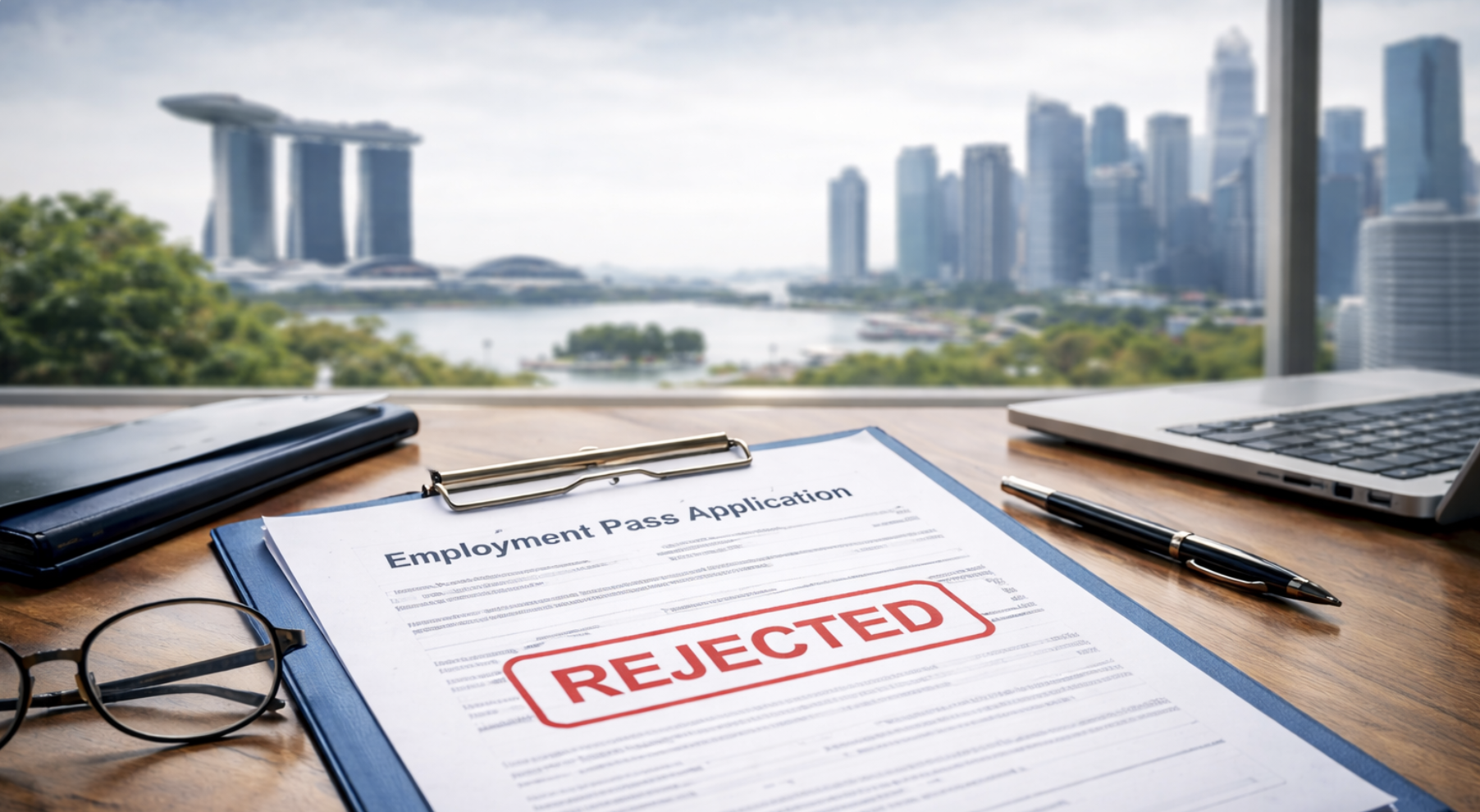
Applying for an Employment Pass in Singapore can be a critical step for foreign professionals, founders, and companies hiring overseas talent. While many applications are approved, some are rejected due to issues relating to salary alignment, employer profile, COMPASS scoring, qualifications, or documentation under the COMPASS framework for Employment Pass approval in Singapore.
A rejection does not always mean the end of the process. In appropriate cases, an Employment Pass appeal can be submitted to the Ministry of Manpower to clarify the application, address the concerns raised, and provide additional supporting information.
Understanding when an appeal is worth filing is important. A strong appeal does not simply repeat the original submission. It should respond directly to the reasons for rejection and show why the application satisfies the Employment Pass criteria.
For a broader explanation of the main application process, documentation requirements, and approval factors, you may also refer to our guide on how to apply for an Employment Pass in Singapore.
Employment Pass Appeal: Quick Summary
- An Employment Pass rejection can usually be appealed within 3 months.
- The appeal should directly address the reasons stated in MOM’s rejection.
- MOM typically takes around 6 weeks to assess an appeal.
- In some cases, a revised application may be more effective than an appeal.
Contents
- Can an Employment Pass Rejection Be Appealed
- Common Reasons Employment Pass Applications Are Rejected
- When an Employment Pass Appeal May Be Appropriate
- Documents That May Support an EP Appeal
- How Long Does an Employment Pass Appeal Take
- When a Fresh Application May Be Better Than an Appeal
- Real Example: Employment Pass Appeal Approved
- Employment Pass Appeal FAQs
- Consultation and Next Steps
Can an Employment Pass Rejection Be Appealed
In many cases, yes. An Employment Pass rejection may be appealed after the Ministry of Manpower refuses the original application.
An appeal allows the employer to submit further clarification or supporting material through the relevant system. The purpose is not to repeat the original application, but to address the specific issues that led to the rejection.
In practice, an appeal is usually appropriate where the rejection appears to arise from matters such as salary justification, role positioning, employer profile, company readiness, or supporting documentation.
However, not every rejected case should be appealed. In some situations, the underlying weaknesses are substantial enough that a revised application may be the better route.
You may also wish to read our guide on Employment Pass rejection in Singapore for a fuller explanation of common refusal reasons and next steps.
Common Reasons Employment Pass Applications Are Rejected in Singapore
Before deciding whether to appeal, it is important to identify why the application was refused. You may wish to review our guide on Employment Pass rejection in Singapore, which explains the most common reasons EP applications are refused and how MOM evaluates borderline cases.
Common reasons include:
Salary does not align with the role
A salary that appears artificially high for the job scope, company profile, or level of seniority may raise concerns.
Weak COMPASS outcome
Where the application does not score strongly enough across salary competitiveness, qualifications, workforce diversity, or support for local PMET employment, approval may be affected. For a more detailed explanation, see our guide on the COMPASS framework for Employment Pass approval in Singapore.
Employer profile concerns
Newly incorporated companies, businesses with limited operational history, or employers with weak workforce indicators may face greater scrutiny.
Qualification or verification issues
Where qualifications are claimed, missing verification proof or unclear academic credentials may weaken the application.
Inconsistent supporting documents
Differences between the declared salary, job title, responsibilities, and company records can create avoidable concerns.
Where a rejection has arisen from one or more of these issues, the appeal strategy should respond directly to those points rather than restate the original application.
For founders or businesses applying under a recently incorporated company, you may also find our guide on Employment Pass for new companies in Singapore helpful.
When an Employment Pass Appeal May Be Appropriate
An appeal may be appropriate where the rejection appears to be capable of clarification or improvement through additional evidence.
Examples include:
- where the role was not fully explained in the original submission
- where salary alignment needs stronger commercial justification
- where the company can now provide additional financial or operational evidence
- where supporting documents were incomplete or unclear
- where the candidate’s qualifications, industry experience, or role necessity require clearer framing
A useful way to think about it is this: an appeal is strongest where the core application remains viable, but the presentation or supporting evidence was insufficient.
Documents That May Support an EP Appeal
The right supporting documents depend on the reason for rejection.
Depending on the case, helpful documents may include:
- a revised job description
- a clarification letter addressing the reasons for rejection
- updated company financials or operational documents
- client agreements, invoices, or commercial contracts
- educational verification documents
- updated organisational charts
- further evidence of the company’s need for the role
- salary benchmarking or commercial justification where relevant
In some situations, employers may first conduct an Employment Pass eligibility assessment before preparing an appeal to determine whether the underlying application remains viable. You may read an example in our case study on an Employment Pass eligibility check approved in Singapore.
The objective is not to flood the appeal with unnecessary material. The better approach is to provide targeted documentation that responds clearly to the concerns raised in the rejection notice.
How Long Does an Employment Pass Appeal Take
In most cases, an Employment Pass appeal takes around six weeks to be assessed by the Ministry of Manpower.
However, the timeline may be extended if MOM requests additional documents or clarification during the review process. The speed and quality of the response can affect how quickly the appeal is resolved.
Because appeals are fact-specific, employers should avoid assuming that all cases move at the same pace. Straightforward cases may progress more efficiently, while matters involving company profile concerns, salary alignment issues, or new business structures may take longer.
For a full explanation of the submission process and required documents, you may also refer to our guide on how to apply for an Employment Pass in Singapore .
When a Fresh Application May Be Better Than an Appeal
In some situations, a stronger outcome may come from revising the application before filing a new submission. This may be preferable where:
• the salary needs to be restructured
• the company requires more time to show operational readiness
• the job scope needs substantial revision
• workforce indicators are currently weak
• the role may benefit from clearer supporting documentation
A practical distinction is this:
• Appeal when the existing application remains sound but needs clarification or additional supporting evidence.
• Reapply when the application itself requires structural improvement.
Employment Pass Appeal Timeline
- Appeals should usually be filed within 3 months of the rejection.
- MOM typically takes around 6 weeks to assess an appeal.
- The timeline may be extended if additional documents or clarification are requested.
- A fresh Employment Pass application is often processed in around two to three weeks.
Timing may also be a practical consideration. A fresh Employment Pass application is often processed within around two to three weeks, whereas an appeal may take approximately six weeks for assessment.
Where the necessary adjustments are relatively minor and the application can be strengthened quickly, some employers may prefer submitting a revised application rather than waiting for the appeal process to conclude.
This distinction is particularly relevant for founders, small businesses, and companies applying under newly incorporated entities.
For a deeper explanation of the structural issues that often lead to refusal, see our guide on Employment Pass rejection in Singapore.
Real Example: Employment Pass Appeal Approved
Appeals can succeed where the issues raised in the rejection are properly addressed.
In one example, a previously refused Employment Pass application was strengthened through clearer role positioning, improved supporting material, and a more structured response to the employer-side concerns. You may read the full details in our Employment Pass appeal approved after initial refusal case study.
That example also illustrates an important point: a successful appeal is not usually about repeating the original submission. It is about correcting what was unclear, weak, or incomplete the first time.
Employment Pass Appeal FAQs
An appeal should usually be submitted within three months of the rejection decision.
In most cases, MOM takes around six weeks to assess an Employment Pass appeal. The process may take longer if additional documents or clarification are requested.
No. Filing an appeal does not guarantee approval.
An Employment Pass appeal is reviewed based on whether the new submission sufficiently addresses the reasons given for the rejection. Appeals that simply repeat the original application without providing additional clarification or supporting documentation are unlikely to succeed.
A stronger appeal typically explains the concerns raised by the Ministry of Manpower and provides additional evidence or context that was not included in the original submission.
In most cases, up to two appeals may be submitted after an Employment Pass rejection.
Appeals should generally be filed within three months of the rejection decision. Each appeal should provide additional clarification or documentation addressing the reasons for refusal.
Submitting repeated appeals without strengthening the application may reduce the likelihood of success, so it is advisable to review the underlying issues carefully before proceeding.
Yes. In some situations, a new application may be the better route if the underlying issues need more substantial correction.
A rejection does not permanently prevent a future application, but repeated unsuccessful submissions may result in closer scrutiny. It is therefore important to identify the correct strategy before proceeding again
This depends on the reason for rejection. Where the company simply needs to provide clearer evidence, an appeal may still be viable. Where the business requires more time to demonstrate operations, workforce strength, or salary sustainability, a revised application later may be more appropriate.
Consultation and Next Steps
If your Employment Pass application has been rejected, it is important to review the reasons for refusal before deciding whether an appeal is the appropriate next step.
Because Employment Pass applications are submitted by the sponsoring employer, appeals are generally filed by the company or by an authorised representative acting on the company’s behalf. Where the applicant wishes to pursue an appeal independently, the cooperation and authorisation of the employer will typically be required.
Some cases benefit from a structured appeal that directly addresses the concerns raised by the Ministry of Manpower. Others may be better handled through a revised application after the underlying issues have been corrected. Reviewing the rejection grounds carefully before filing an appeal can help avoid repeated refusal.
In more complex situations, applicants may benefit from structured guidance from an immigration lawyer in Singapore who is familiar with the Employment Pass framework and appeal process.
If you would like guidance on an Employment Pass appeal or a fresh application strategy, you may explore our Singapore Work Pass services.
Alternatively, you may book a 20 minute consultation to review your Employment Pass appeal options.
For the broader application process and document requirements, you may also refer to our guide on how to apply for an Employment Pass in Singapore.

About the Author: Sulochana Uthirapathi is the Founder of Transform Borders, a Singapore immigration consultancy established in 2017. She specialises in Employment Pass (EP), Permanent Residency (PR) and Citizenship applications, supporting professionals, families and corporate clients with legally guided and structured immigration processes.