
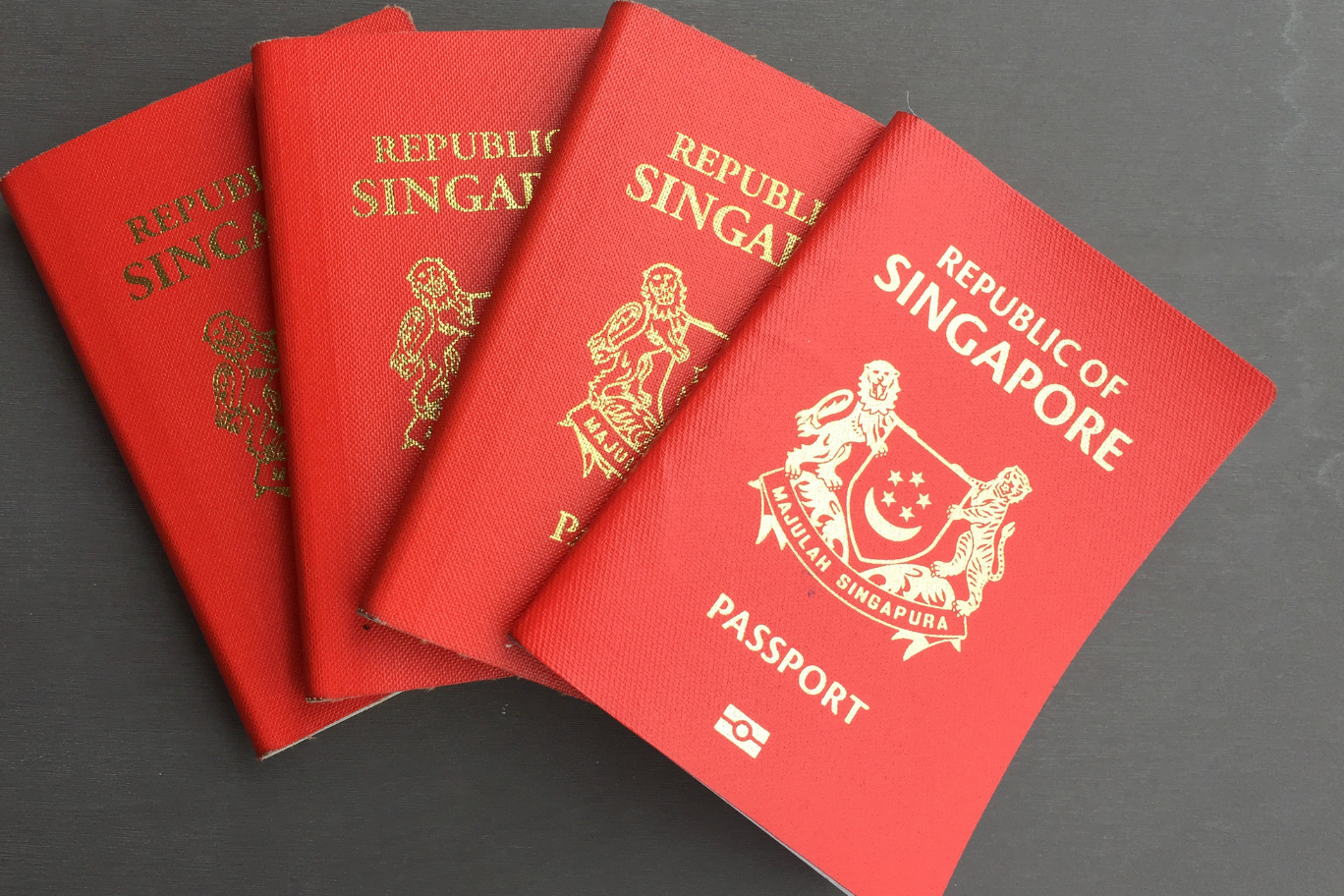
This guide explains how Singapore citizenship applications are assessed, who may qualify, and the key considerations around timing, National Service obligations, and long-term commitment. It is intended for Singapore Permanent Residents, families applying through sponsorship schemes, and individuals seeking clarity before taking this significant step.
What is Singapore Citizenship?
Unlike Permanent Residency, Singapore citizenship carries long-term legal, civic, and National Service obligations. Applicants are assessed not only on economic contribution, but also on integration, family ties, and long-term commitment to Singapore.
Singapore citizenship grants you the full legal status of a Singaporean, including the right to reside permanently in the country, participate in civic life such as voting, and access government benefits, subsidies, and unrestricted employment opportunities across both the public and private sectors.
Why Apply for Singapore Citizenship?
Here are some of the key benefits of becoming a Singaporean citizen:
- Healthcare: Enjoy access to world-class healthcare services at subsidised rates.
- Education: Citizens are given priority in school placements and can access government financial aid and scholarships.
- Travel Freedom: The Singapore passport is one of the strongest globally, offering visa-free or visa-on-arrival access to numerous countries.
- Housing: Citizens are eligible for various housing grants and public housing options, making it easier to own a home in Singapore.
- Government Support: Access government subsidies for medical care, housing, and education.
By following the steps outlined below, you can confidently apply for Singapore citizenship and enjoy these benefits.
Eligibility for Singapore Citizenship
To apply for Singapore citizenship, you must meet one of the following eligibility requirements:
a) Singapore Permanent Residents (PRs) Aged 21 and Above
- You must have been a PR for at least two years.
- You can include your spouse and unmarried children under 21 (born within a legal marriage or legally adopted) in your application.
If you are currently holding a work pass such as an Employment Pass and considering a longer-term pathway towards Singapore citizenship, you may first wish to review our Singapore PR Eligibility Calculator and our step-by-step guide on applying for Singapore Permanent Residency before planning your citizenship journey.
b) Spouse of a Singapore Citizen
- You must have been a PR for at least two years and married to a Singapore citizen for at least two years.
- Your Singaporean spouse must sponsor your application by logging into the ICA e-Service portal using SingPass.
c) Unmarried Child Below 21
- You must be born to a Singapore citizen within a legal marriage or legally adopted by a Singapore citizen.
- The application must be submitted by your Singapore citizen parent.
d) PR Student Studying in Singapore
- You must have resided in Singapore for over three years, including one year as a PR.
- You must have passed at least one national exam (PSLE, GCE ‘N’/‘O’/‘A’ levels) or be in the Integrated Programme (IP).
- If you are aged 15 and above, you can apply using SingPass. Applicants below 15 can apply through the non-SingPass option.
e) Aged Parent of a Singapore Citizen
- You are a PR and an aged parent of a Singapore citizen. Your citizen child will need to sponsor your application.
Important Factors Considered by ICA:
Citizenship applications are assessed holistically. Applicants with complex family profiles, National Service considerations, or cross-border circumstances may benefit from early professional guidance. You can learn more about when to engage an immigration lawyer in Singapore for citizenship and PR matters.
ICA evaluates your application based on your family ties to Singaporeans, economic contributions, qualifications, age, family profile, length of residency, and your commitment to integrating into Singaporean society.
In short: Meeting the minimum criteria is not enough. Citizenship outcomes are strongly influenced by timing, profile stability, and how consistently your personal, family, and work circumstances reflect long-term commitment to Singapore.
For a clearer understanding of how immigration policies and approval trends are evolving, see our Singapore Immigration Trends 2025–2026 Report.
For full eligibility criteria, visit the official ICA website on Singapore Citizenship.For a detailed breakdown of eligibility factors and documents, see our Singapore citizenship requirements guide.
Step-by-Step Application Process
a) Decide Who You Want to Apply For
You can apply for yourself, your spouse, and any unmarried children under 21. For students and aged parents, a Singapore citizen family member must act as the sponsor.
If you are applying for yourself, your spouse, or your children and want to ensure a smooth process, you may wish to review when legal guidance may be relevant for citizenship or PR matters.
b) Gather Required Documents
Before starting your application, gather the following documents:
- Identification Documents: Passport, birth certificate, NRIC, marriage certificate.
- Employment and Financial Information: Payslips, employment letter, income tax returns.
- Education Documents: Certificates, transcripts, and professional qualifications.
- Additional Documents: Medical records, financial statements, testimonials, or other supporting documents.
For the full checklist of required documents, refer to the ICA Citizenship Document Checklist.
c) Log into ICA e-Service
Using SingPass, log into the ICA e-Service portal to begin your application. Follow these steps:
- Select Applicants: Add your spouse and children if applicable.
- Fill in Details: Complete all required fields (marked with an asterisk *) for each applicant.
- Upload Documents: Ensure that your documents are in the correct format. All non-English documents must be translated and notarised. The Immigration Checkpoint Authority (ICA) only accepts:
- Translations by the embassy of the country/place that issued the document.
- Translations produced by a notary public in Singapore or the country/place that issued the document.
d) Review and Declare
After completing the application:
- Review Information: Double-check all entries for accuracy.
- Send Declarations: All applicants must review and declare their information.
- Payment: Pay the application fee of S$100 per applicant (e.g., S$300 for a family of three).
- Final Submission: Download a copy of your submitted application and receipt for your records.
In summary: While the citizenship application process is fully online via ICA’s e-Service, many delays arise not from eligibility issues but from incomplete uploads, inconsistencies, or missed system deadlines. Careful preparation before starting the application is often more important than speed.
Common Mistakes to Avoid When Applying for Singapore Citizenship
To ensure a smooth application process and avoid delays, make sure to avoid these common mistakes:
1. Incomplete or Incorrect Documentation
Failing to provide complete documentation is a common issue. Make sure all necessary documents, such as employment letters, income tax returns, and education certificates, are submitted and up-to-date.
For cases where legal expertise may be required, you might find it useful to review our list of top immigration lawyers in Singapore who specialise in citizenship and PR applications.
For first-time applicants who mainly need help with document collation and submission, some choose to work with a professional immigration agency in Singapore.
2. Not Meeting Eligibility Requirements
Many applicants overlook certain eligibility criteria, especially the required length of residency. Confirm your eligibility before applying.
3. Missing Deadlines
You have 7 days to complete your application and upload all required documents. Missing this deadline means you’ll have to restart the process.
4. Incorrect or Outdated Information
Submitting inaccurate or outdated information can lead to delays or rejection. Double-check all details, especially any changes in employment or address.
5. Skipping National Service Requirements
Male applicants who are liable for National Service (NS) must fulfil these obligations. Failure to do so can result in the rejection of the application.
6. Failing to Renounce Foreign Citizenship
For applicants aged 21 and above, renunciation of foreign citizenship is mandatory. Start this process early to avoid delays.
7. Overlooking the Singapore Citizenship Journey (SCJ)
If you’re aged 16 to 60, completing the Singapore Citizenship Journey (SCJ) is essential after receiving your In-Principle Approval.
8. Underestimating Processing Times
The processing time is 12 months for adults and 2 months for children born overseas. Plan your timeline accordingly to avoid unnecessary frustration.
Before you apply: Singapore citizenship is a permanent legal commitment.
For families with sons approaching National Service age, applicants planning overseas relocation,
or PRs with recent employment changes, timing and profile readiness can significantly affect outcomes.
A well-timed application is often more effective than an early one.
If you are unsure whether now is the right time, you may speak with an immigration professional before proceeding.
Related reading:
What Happens After Submission?
Once your application is submitted, you can track its status through MyICA using SingPass. The processing time for adults is 12 months, and for children born overseas to Singapore citizens, it’s 2 months.
Applicants who are unsure how ICA evaluates citizenship readiness may also wish to review the official citizenship requirements and assessment criteria before proceeding.
Singapore’s citizenship policies are updated periodically. For key trends affecting PR and citizenship approvals, see our Singapore Immigration Trends 2025–2026 Report.
What If My Citizenship Application Is Rejected?
Not all citizenship applications are approved on the first attempt. Where an application is rejected, ICA does not provide detailed reasons, and reapplication or appeal requires careful assessment of timing, documentation, and changes in circumstances. Before proceeding further, a professional review can help identify gaps and determine whether an appeal or reapplication is appropriate. You may wish to review the process involved in a citizenship or PR application appeal in Singapore.
Steps After Approval
1. The Singapore Citizenship Journey (SCJ)
Applicants aged 16 to 60 years old must complete the Singapore Citizenship Journey (SCJ) after receiving In-Principle Approval (IPA). The SCJ program consists of:
- e-Journey: An online course to learn about Singapore’s history, culture, and values.
- Experiential Visit: A visit to key cultural and historical sites in Singapore.
- Community Sharing Session: Engage with community leaders and other new citizens.
For more details, visit the official SC Journey Guide.
2. Renunciation of Foreign Citizenship
If you hold foreign citizenship, you must renounce it after receiving In-Principle Approval. This applies only to applicants aged 21 and above. Ensure all legal obligations (e.g., property ownership issues) in your home country are settled before renouncing.
For more information on renouncing foreign citizenship, you may approach the Embassy of your foreign Nationality/Citizenship to enquire on the procedures for renunciation.
3. National Service Obligations
All male applicants are required to complete National Service (NS) unless exempted. Male applicants who obtained Singapore citizenship as foreign students or through their parents must fulfil NS obligations upon reaching 18 years old. This includes:
- Full-Time NS: A commitment of two years.
- NS Liabilities: Those who fail to fulfil their NS duties cannot renounce their Singapore citizenship.
For further details, refer to the CMPB NS Requirements.
4. Citizenship Ceremony
Once you’ve completed all steps, you will be invited to attend a Citizenship Ceremony, where:
- You’ll take the Oath of Allegiance.
- Receive your Singapore Citizenship Certificate.
- Collect your NRIC (National Registration Identity Card).
Who Should Carefully Consider Timing Before Applying for Citizenship?
While eligibility is important, citizenship outcomes are often influenced by timing, profile stability, and long-term plans. Applying at the right stage can materially affect how an application is assessed.
While Singapore citizenship offers long-term stability and benefits, it also comes with permanent legal, civic, and family obligations. In some situations, timing your application carefully is just as important as eligibility itself.
Before proceeding, the following profiles should consider their circumstances closely and, where appropriate, seek professional guidance.
Families with Sons Approaching National Service Age
National Service (NS) obligations are a critical consideration for families with male children.
For families applying under family sponsorship routes (such as spouse or child of a Singapore citizen), citizenship approval for a minor male child will typically result in full National Service obligations upon reaching enlistment age.
For families where the child is already a Singapore Permanent Resident, NS liability may already apply regardless of future citizenship status. In such cases, applying for citizenship does not create the obligation, but it does formalise long-term ties to Singapore.
Parents should therefore understand:
- Whether NS obligations already apply due to PR status
- How citizenship timing may affect future education, relocation, or overseas plans
- That failure to fulfil NS obligations can have serious consequences for future immigration matters
Careful planning is especially important for families who are uncertain about long-term residence in Singapore.
PRs with Recent Job Changes or Employment Instability
Citizenship applications are assessed holistically, and employment stability remains a key factor.
Applicants who have:
- Recently changed employers
- Experienced gaps in employment
- Moved into contract, freelance, or self-employment roles
may wish to allow time for their profile to stabilise before applying. A stronger employment track record can materially improve how an application is assessed.
Applicants Planning Overseas Relocation or Extended Absences
Citizenship signals a long-term commitment to Singapore. Applicants uncertain about long-term residence may wish to review how ICA evaluates commitment under Singapore’s broader immigration framework.
Applicants who are:
- Considering relocation abroad
- Planning extended overseas assignments
- Maintaining primary residences outside Singapore
Applying for citizenship while actively planning to relocate overseas, or while living outside Singapore for extended periods where Singapore is no longer the primary base, may undermine the credibility of long-term commitment, even if eligibility requirements are technically met.
Applicants Holding Assets in Countries with Renunciation Restrictions
Singapore does not allow dual citizenship for applicants aged 21 and above. Renunciation of foreign citizenship is mandatory after In-Principle Approval.
Applicants should consider:
- Whether their home country restricts or complicates renunciation
- Potential impacts on property ownership, inheritance rights, or business interests
- Processing timelines for renunciation, which may delay citizenship completion
These issues are often overlooked early but can create significant stress later in the process.
Applicants with Admissibility Issues or Complex Family Profiles
Some applicants may wish to review timing and documentation strategy more carefully before applying for citizenship, particularly where there are underlying admissibility or family-structure considerations.
This may include applicants with:
- Recent immigration refusals, deportations, or entry bans in other countries
- Past criminal convictions or ongoing legal matters, even if resolved
- Outstanding tax issues, regulatory breaches, or compliance concerns in Singapore or overseas
- Complex family profiles, such as blended families, dependants from previous marriages, or cross-border custody arrangements
- Prior sponsorship histories involving a former spouse or dependants, followed by remarriage or changes in family structure
In such cases, careful preparation and clear disclosure are essential. A premature application may be less effective than a well-timed, carefully structured submission that fully addresses these considerations.
Key takeaway: Even when eligibility requirements are met, applying at the right time with stable employment, clear family plans, and a clear long-term commitment to Singapore can significantly influence how a citizenship application is assessed.
Frequently Asked Questions (FAQs)
The following questions address common concerns we receive from Singapore Permanent Residents and families considering citizenship, including timing, eligibility, and long-term implications.
The application fee is S$100 per applicant, plus an additional S$70 for the Singapore Citizenship Certificate and S$10 for the Singapore Identity Card (for new citizens aged 15 and above).
These are government fees payable to ICA. They do not include any professional advisory or document preparation support, which is optional and varies depending on complexity.
For most adult applicants, ICA processing takes around 12 months. In some cases, it may be shorter or longer depending on profile complexity, family composition, and whether ICA requests additional documents during review.
Yes, you can include your spouse and unmarried children under 21 in the same application.
Each family member is assessed individually, even when submitted as a single application.
Yes, all male applicants must fulfil National Service (NS) obligations. This requirement applies to those who received citizenship as foreign students or through their parents, and they are required to serve full-time NS at the age of 18.
NS obligations are a key factor ICA considers, especially for families with long-term relocation plans.
No, Singapore does not allow dual citizenship for applicants aged 21 and above. You must renounce your foreign citizenship to obtain Singapore citizenship.
Renunciation is required only after In-Principle Approval, not at the point of application.
Yes. A rejection does not permanently bar future applications. Applicants may reapply after allowing sufficient time for changes in circumstances, such as longer residency, stronger employment history, or clearer family integration. ICA assesses each application on its current merits.
While some applicants apply independently, others choose to seek guidance where timing, National Service implications, or family structures are complex. Professional review can help ensure documentation is consistent, disclosures are complete, and the application is submitted at an appropriate stage.
Book a Consultation
If you would like structured guidance on Singapore citizenship applications, including eligibility assessment, timing considerations, and submission strategy, you may refer to our Singapore citizenship services.
If you are unsure whether now is the right time to apply, you may book a 20-minute consultation to clarify suitability, risks, and next steps.

About the Author: Sulochana Uthirapathi is the Founder of Transform Borders, a Singapore immigration consultancy established in 2017. She specialises in Employment Pass (EP), Permanent Residency (PR) and Citizenship applications, supporting professionals, families and corporate clients with legally guided and structured immigration processes.